In most of the sports we do we talk about commitment. At some stage there is a point of no return, when you can be said to be committed. The moment when your kayak rolls over the lip of a rapid, and the only way out is through. The feeling as you move your weight onto a marginal handhold, and the only options are to fall or move upwards. When you find yourself high enough up on a wall that the only way off is up and over. As you feel a wave rise up underneath you and accelerate your board past the point of pulling back. All these moments have the effect of making hindsight useless. The only hope, the only logical thing, is to look forward and make the best use of each moment, as it comes. This is why we do it, this is why we love it.
Ocean sailing is like this but slower. The point of commitment is hard to define, but at some moment on the voyage it becomes obvious that there are no options other than to continue. Retreat becomes far harder than simply finishing. Not that there is anything particularly hard about being out at sea for two weeks. But there are some aspects that wear on the consciousness. You are surrounded by constant movement and noise. There is the never ending quest for the thing that is going to break next, and you hope to find it before the breaking part happens. There is the void of the sea, sucking at the boat, and sucking at your mind. The tension and strain, applied to body, mind and boat, works to wear out the tools keeping us alive.
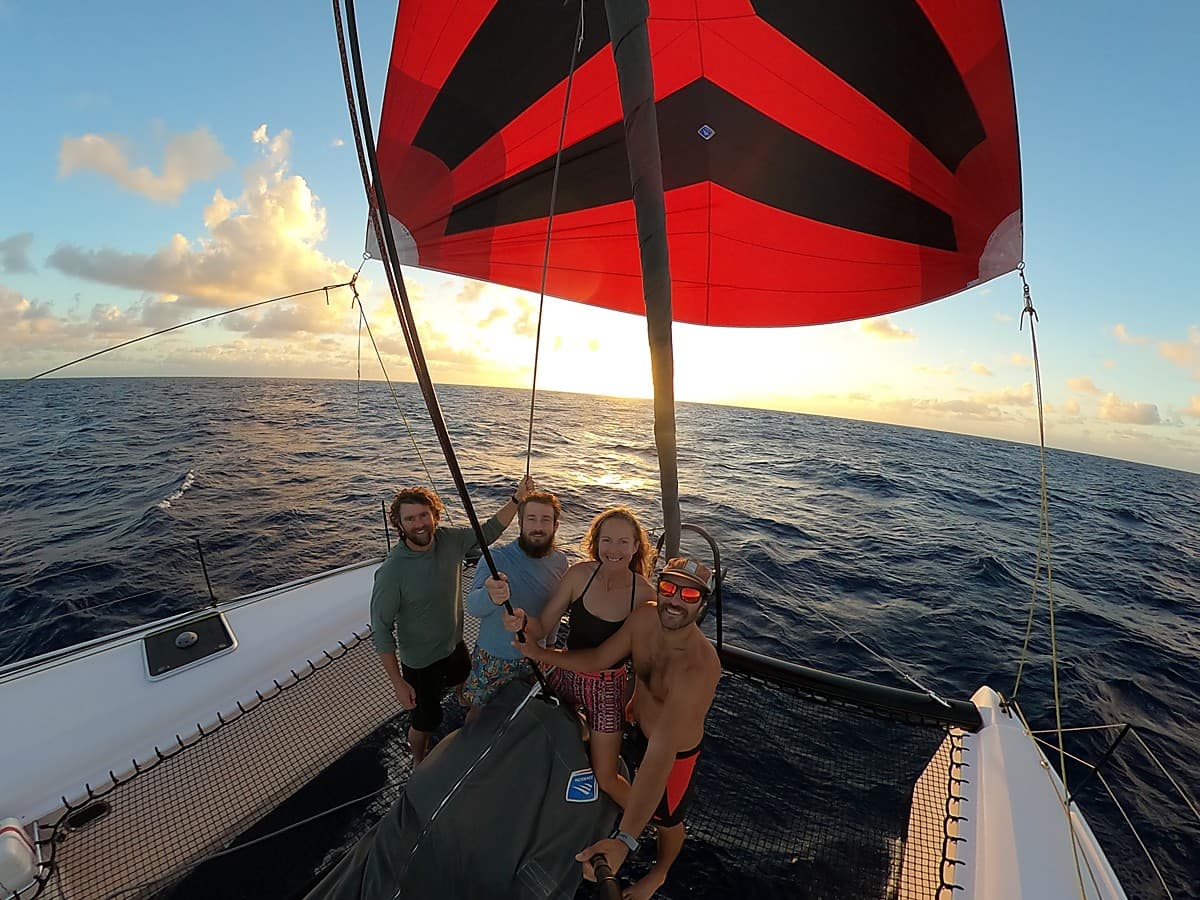
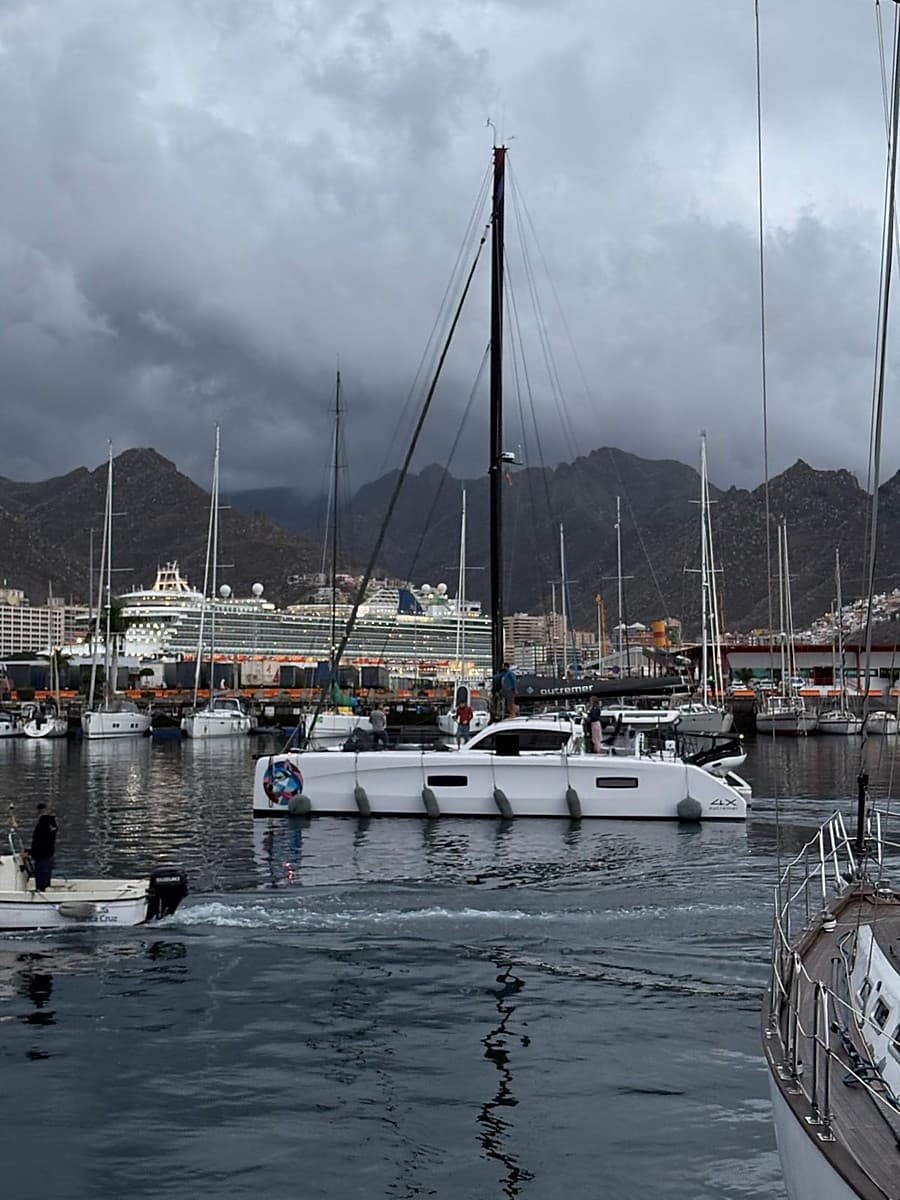
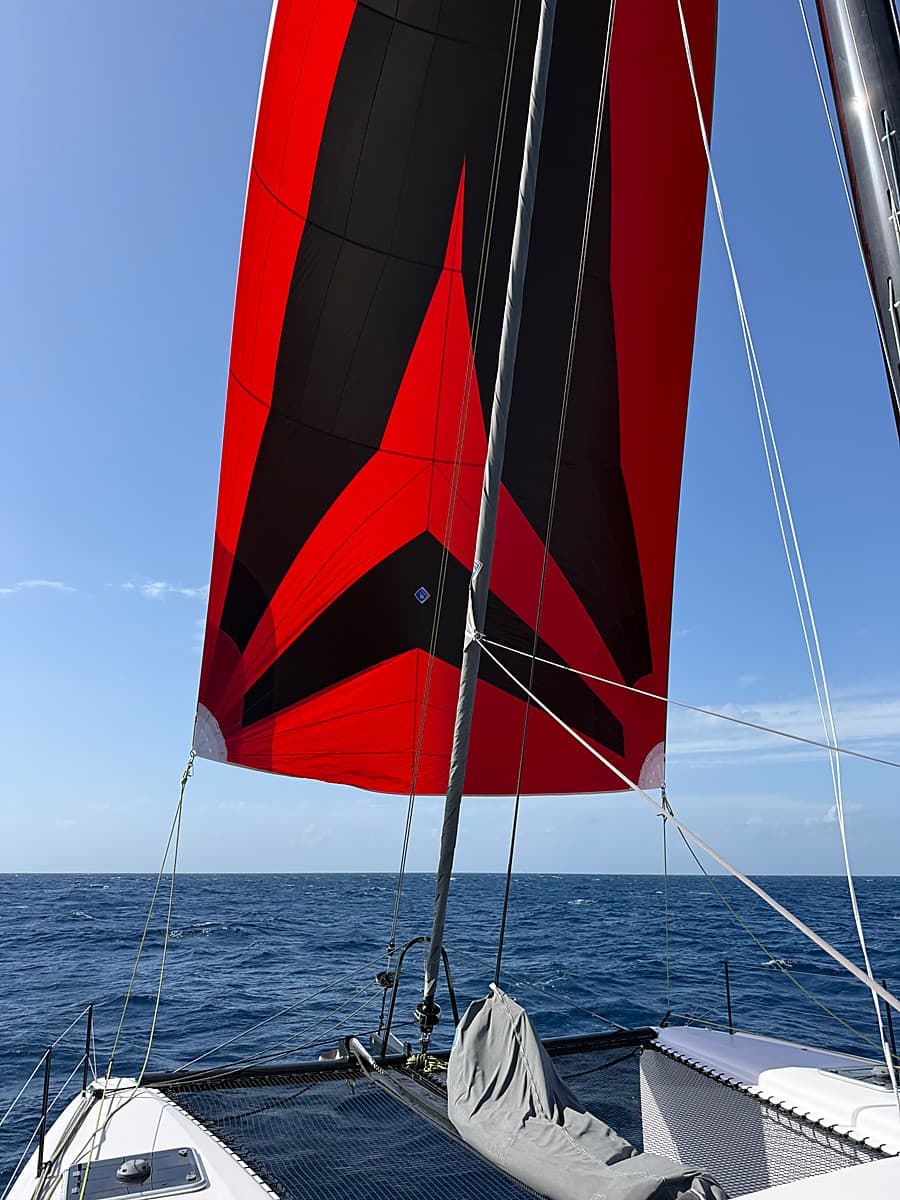
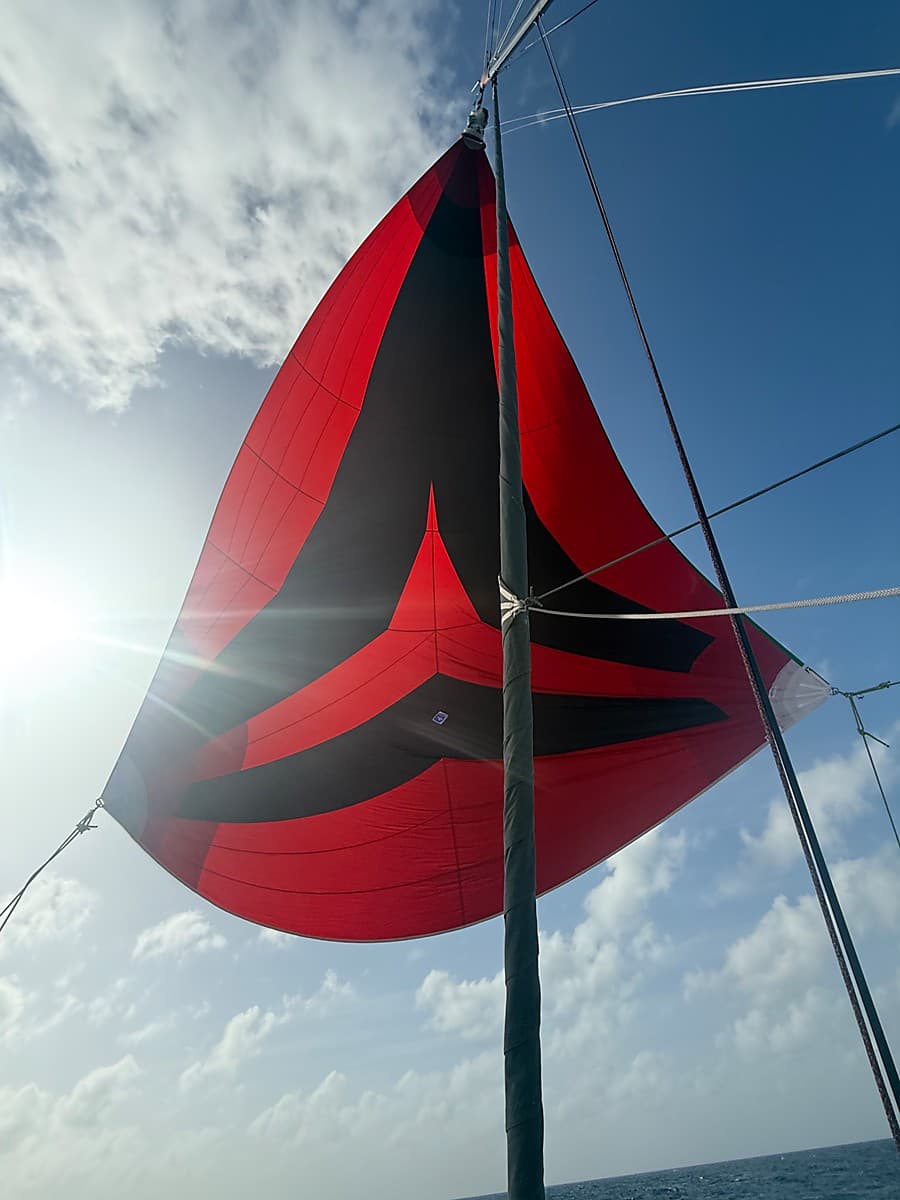
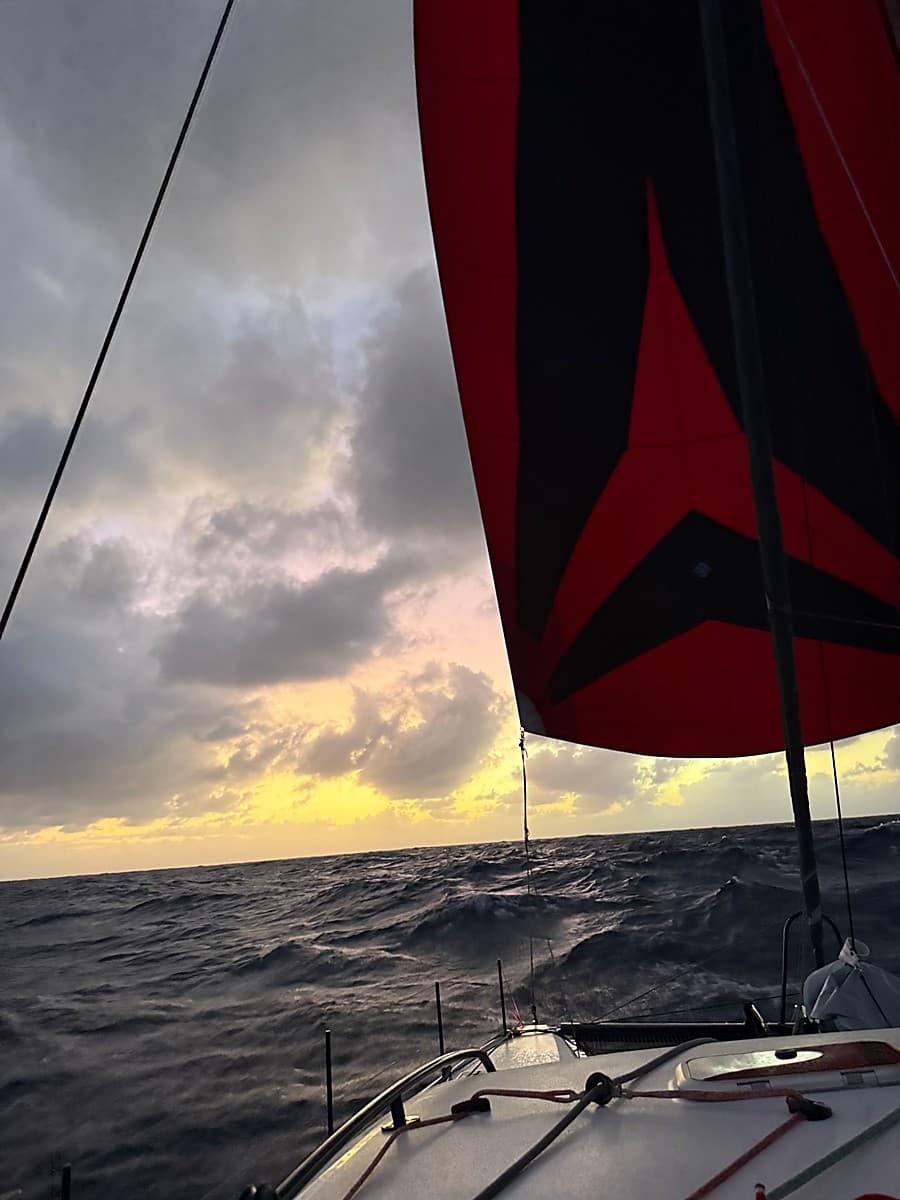
We left Tenerife early in the morning and struggled to find wind initially. We motored offshore a mile or two and found something to be getting along with. Before too long we were cruising along under gennaker and full main, making good time directly towards Barbados, our intended destination. That first day we also raised our new spinnaker, which turned out to be the MVP of the crossing. It allowed us to go dead downwind, something none of our other sails can tolerate. After some trials we took down the mainsail, and were just being dragged across the ocean by a huge parachute hooked to the front of our boat. This brought out some unusual handling characteristics, and introduced a movement we were not really used to, but we were making half of wind speed down to 10 knots, so we were not complaining. This sail makes miles, eating the wind as it chases down the next horizon.
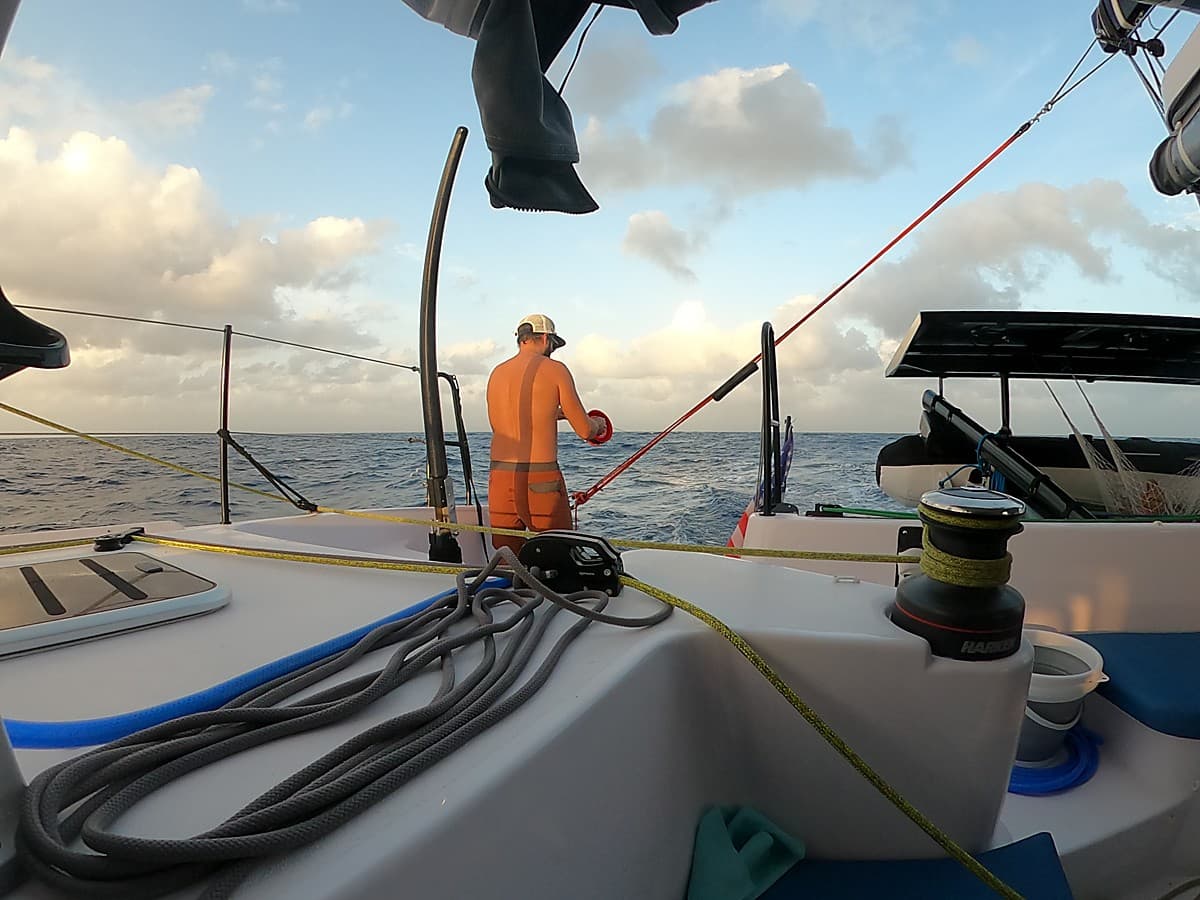
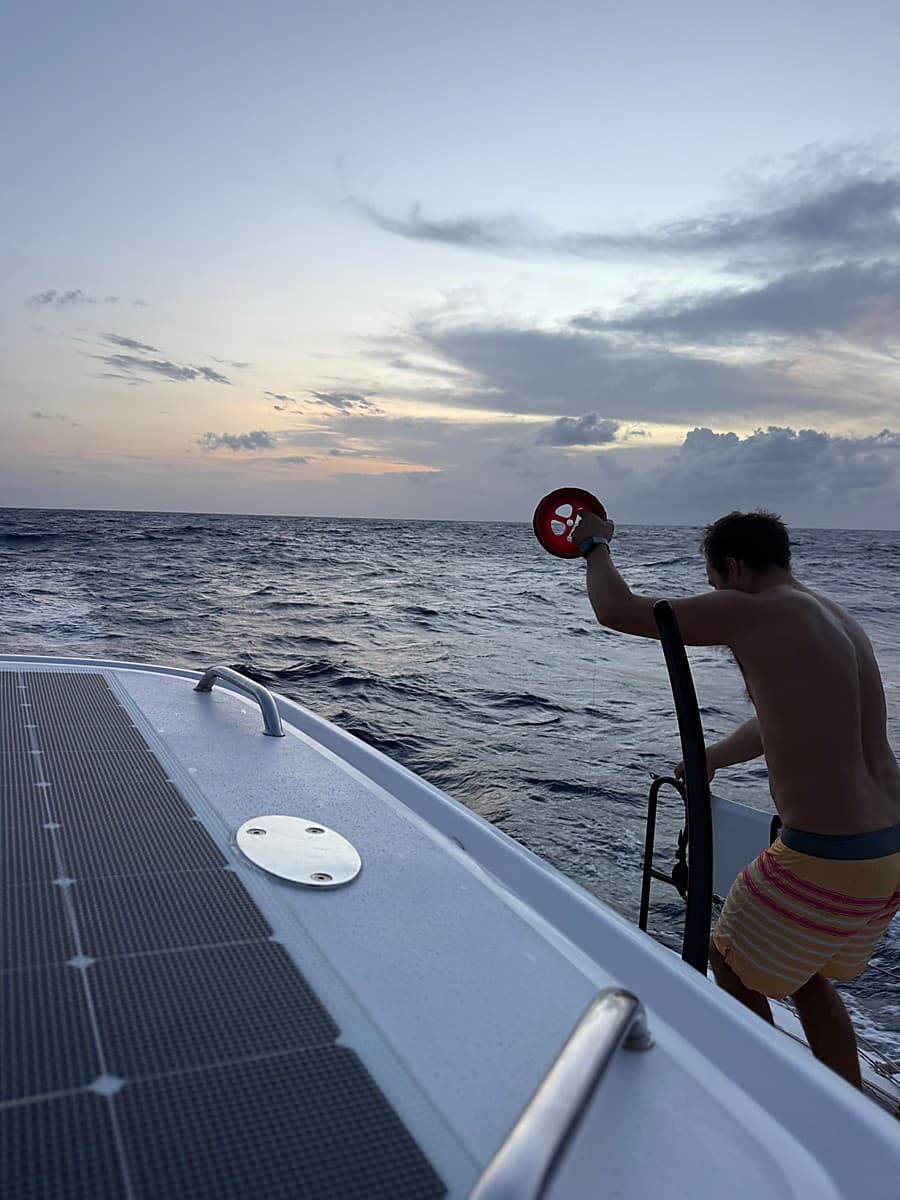
On our first day out we also caught a fish, a small Mahi. We had fish tacos that were pretty good, and then failed to catch a fish for the next 13 days. Every day we had a fish hit the gear, but we were unable to bring any onboard for whatever reason. This was rather frustrating. It’s good we had packed enough food to last a couple months, and there was no shortage of things to munch on. After the passage I started doing a bit more research into how to catch and keep fish.
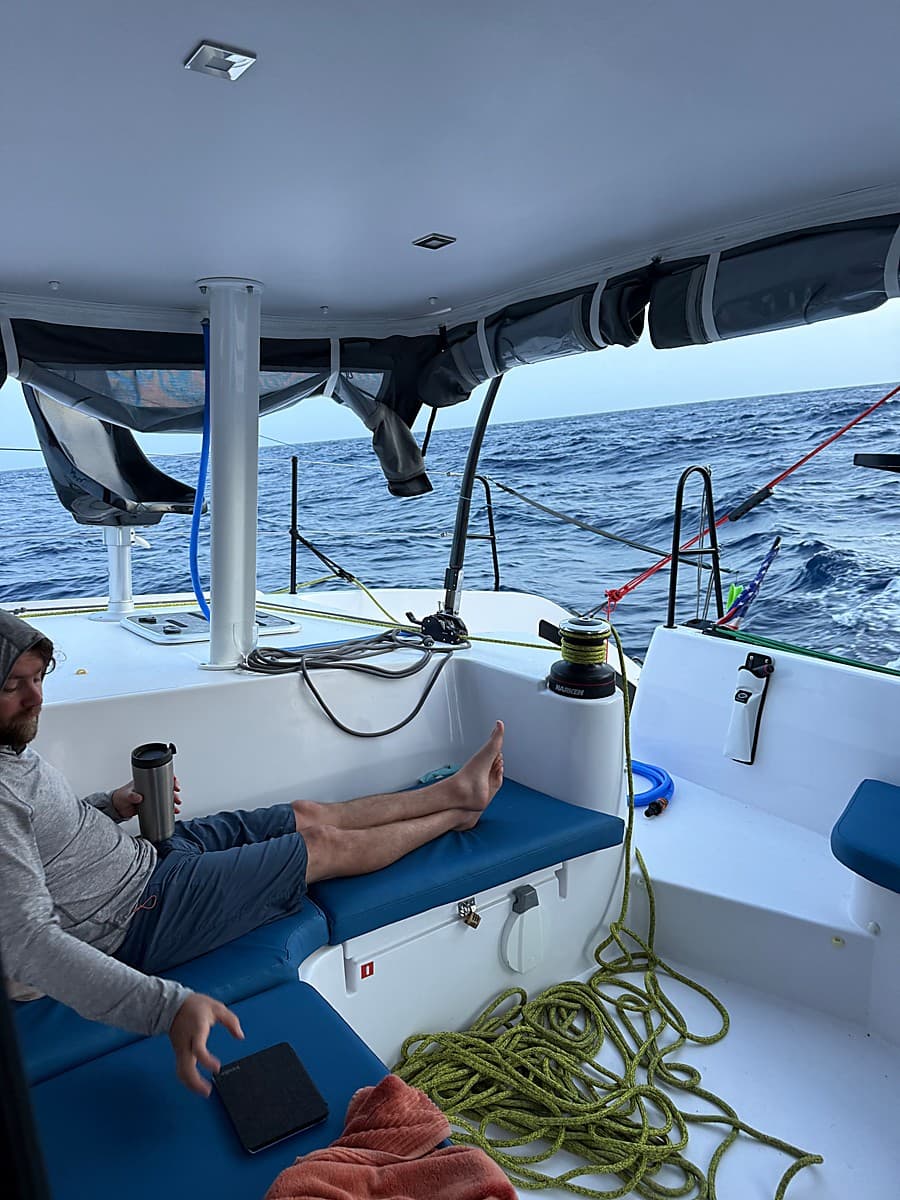
The passage itself assumed the life at sea that is inevitable. All actions were in service of keeping the boat moving forward. Days would go by with the spinnaker pulling us forward and the autopilot keeping us on course. There was nothing to do other than fail to catch fish and read a book. We also kept ourselves fairly well fed. Other days were squally and miserable, with many sail changes, and hours of having to helm by hand as the waves did their best to throw us off course. The wave size varied throughout the trip, but we never saw too much less than three meter swell. The direction was pretty consistently directly out of the east. Overall, I think the large swell contributed positively to our average speed, as we were able to surf quite a distance. This was way better when we were helming by hand as we could anticipate the swells, and put the boat in the optimal spot for catching a good surf. We hit our top speed of 24 knots on a nice long wave, the sea spraying up and over the decks as the boat found the trough.
The spinnaker stayed up to around 35 knots. Thirty is what the manufacturer says, and our preferred limit, but when the little squalls come in it is not always possible to predict what the wind will top out at, and sometimes we were guilty of leaving it up a bit too long. Our only major boat issue was with the spinnaker halyard, which finally parted ways with the mast on the last day when the lashing chafed through. Luckily disaster was averted as the shackle jammed in the swivel, preventing the whole sail from crashing into the ocean.
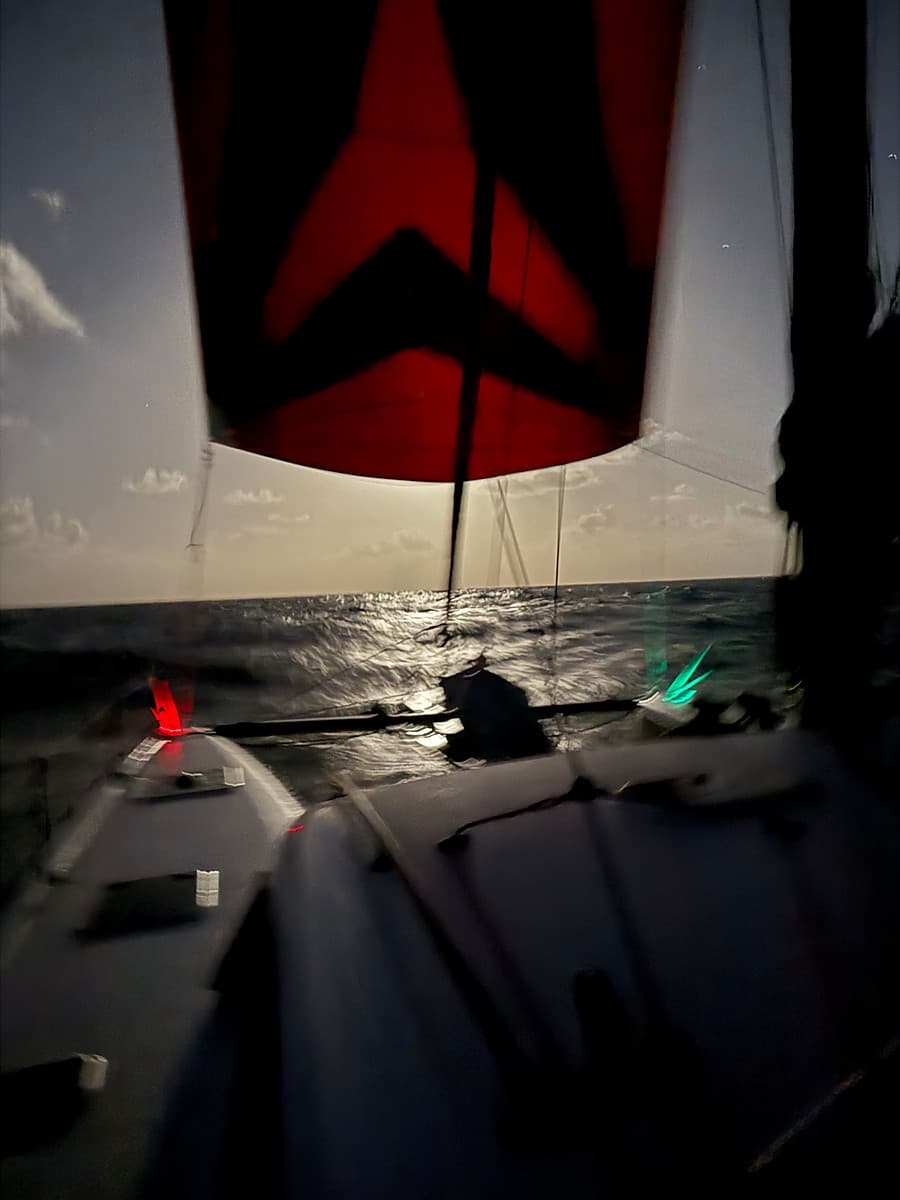
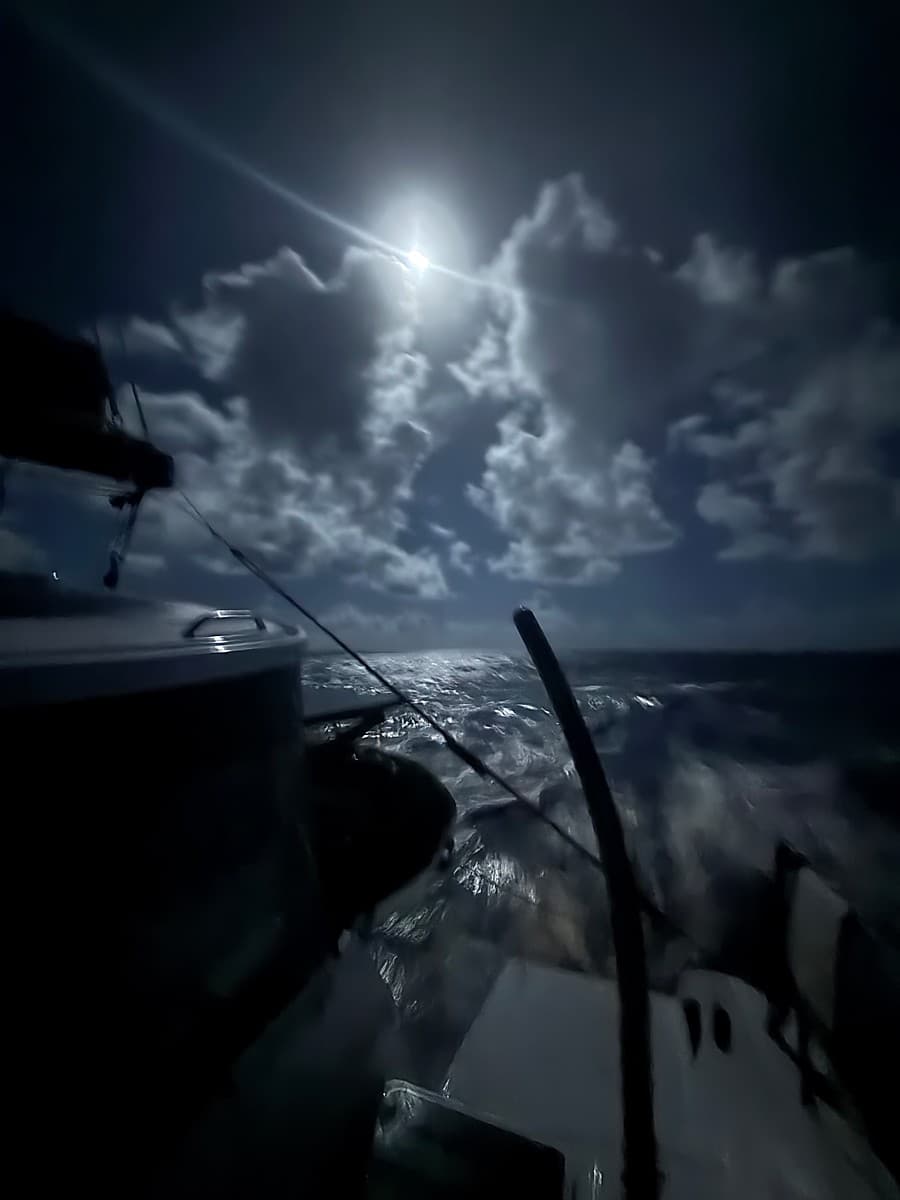
Somewhere around day four we had a sleepless night as we were pounded by squalls all night, and changed sails around six times. In the middle of a moonless night, being lashed by sea spray and sheeting rain while you are trying to rig a sail on the trampoline in 30+ knots of wind things start to feel pretty real. If you went over the side there would be no chance. But then you just towel off and climb back under your down comforter until the next sail change is needed. It’s civilized adventuring.
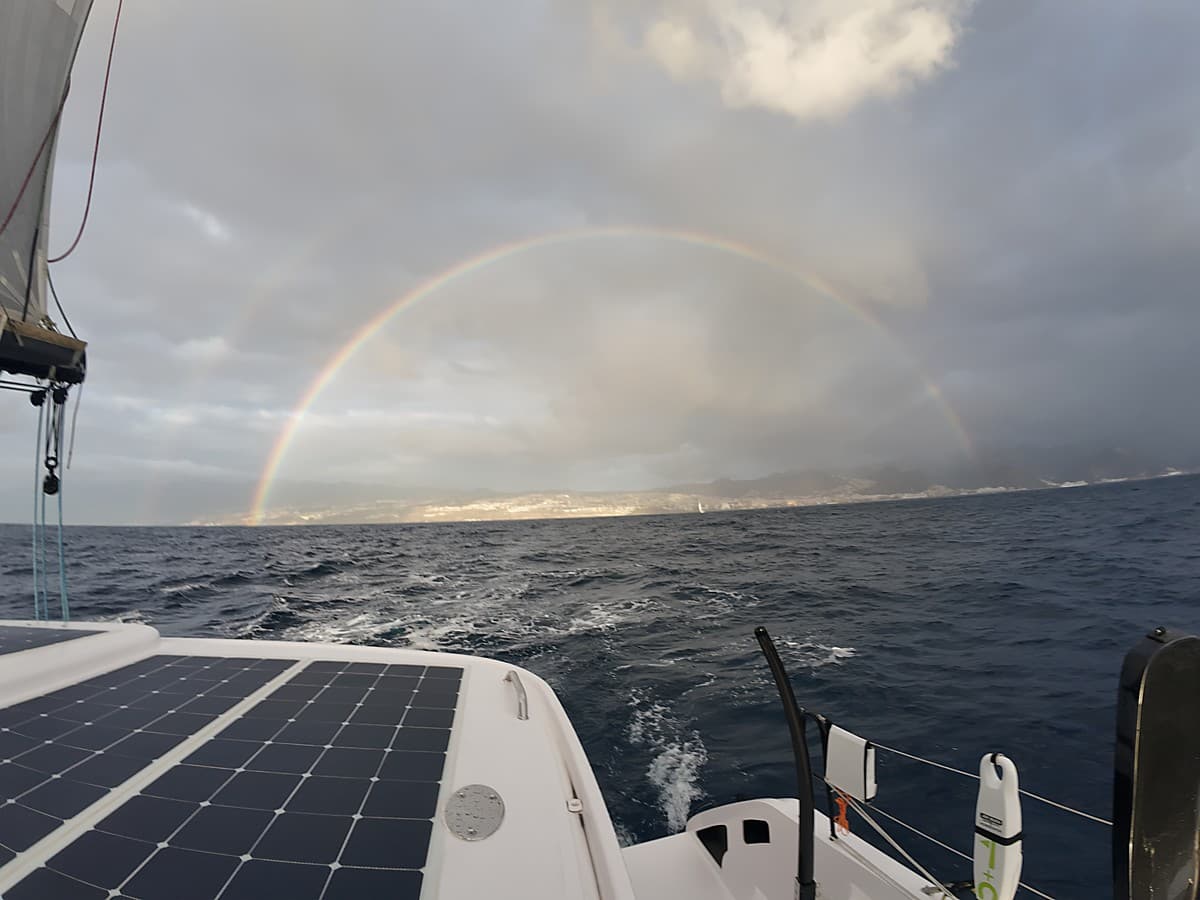
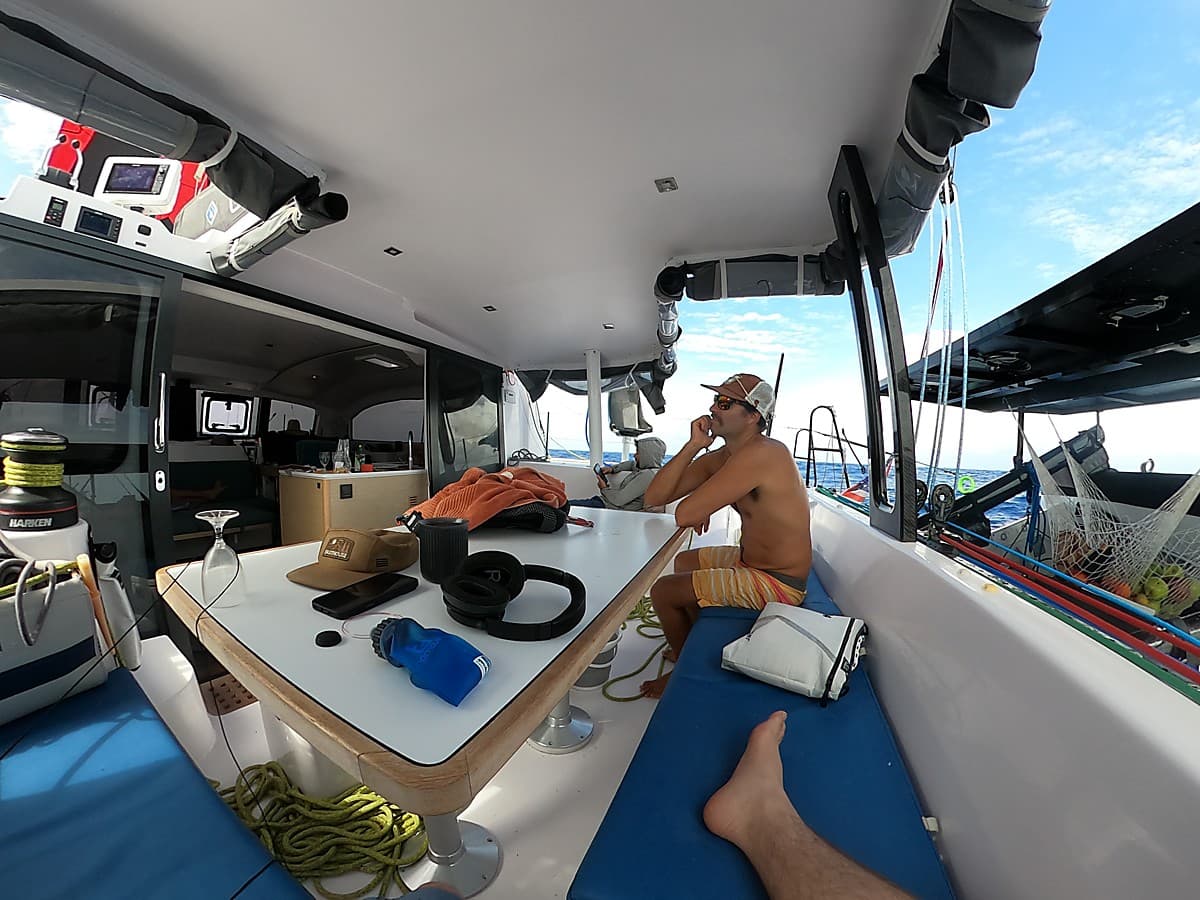
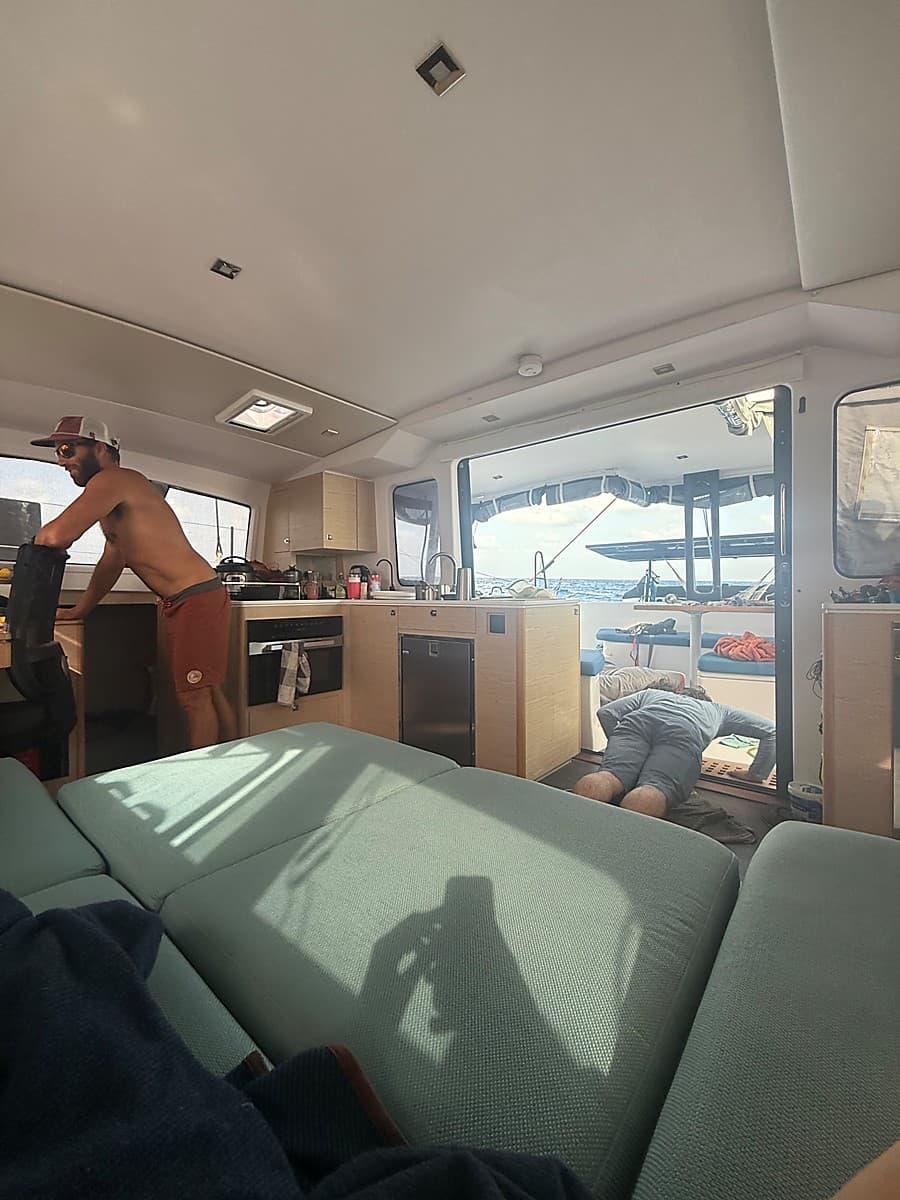
The boat performed admirably. It was loaded up with four people, half a ton of food, and all our toys, but still maintained an average of 200 mile days, with our best day being around 250. This wasn’t bad, as we didn’t always have great wind. All our systems kept up with our needs, and we only ran the engines for three hours to charge our batteries during the miserable weather that was present in the first few days of the trip. Other than that our solar kept up with demand, although we had to deploy our 600w auxiliary panel each day. That piece of equipment was a life saver.
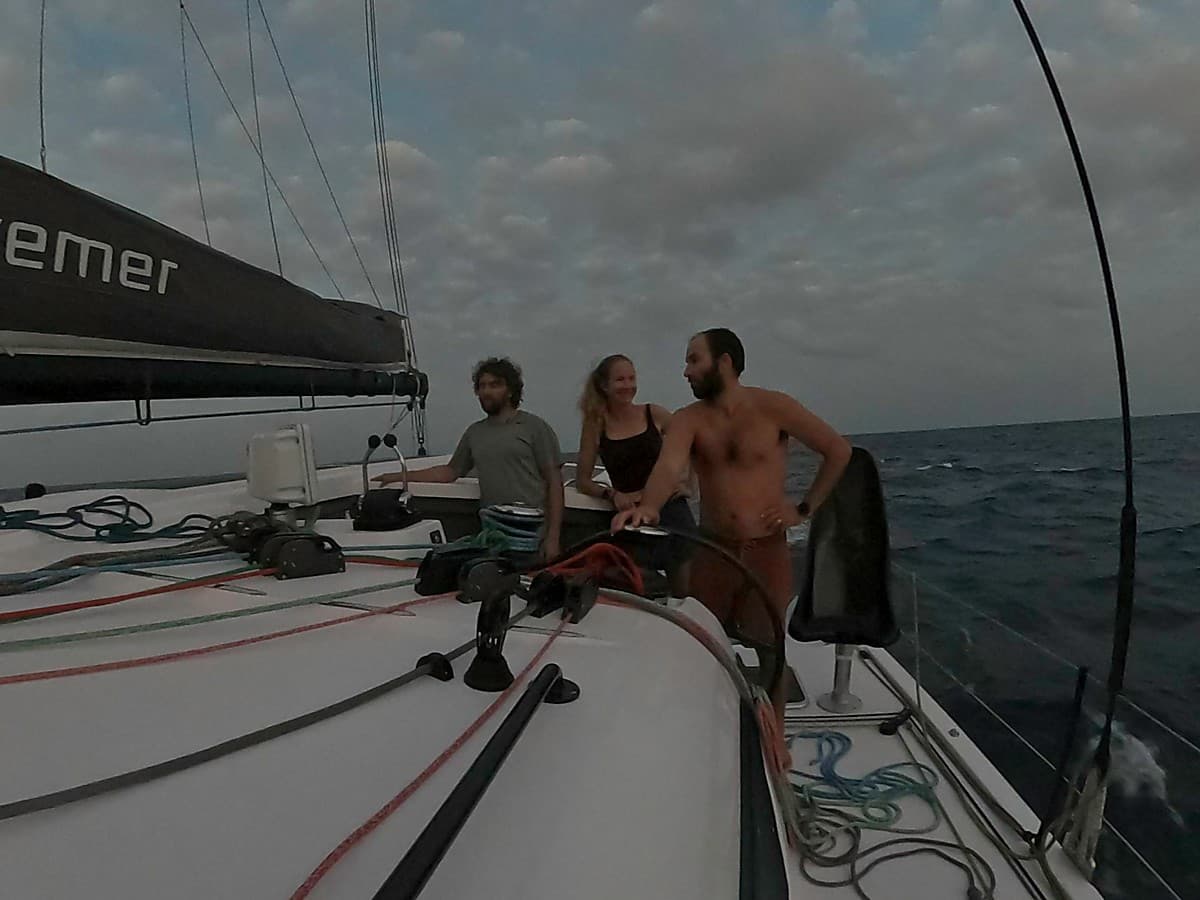
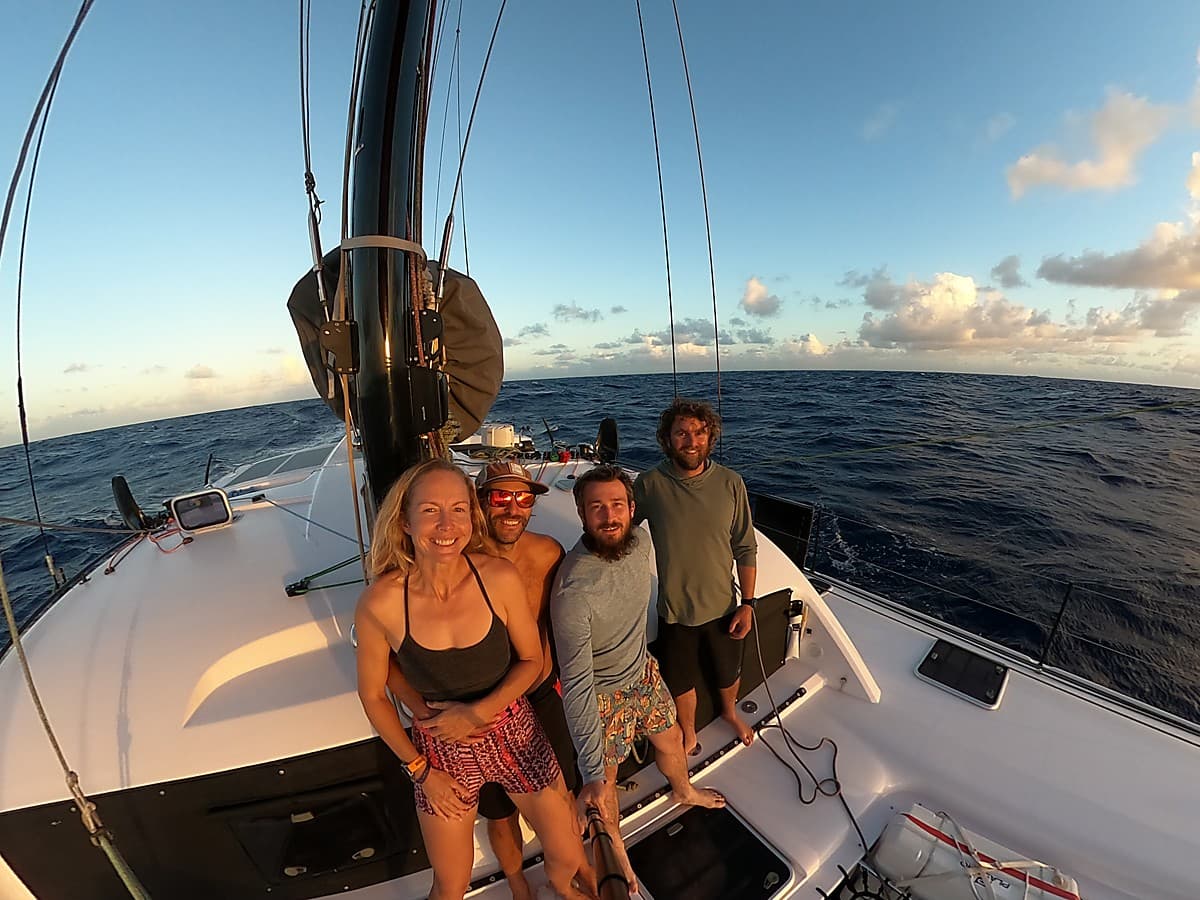
The crew was similarly solid. Matt was familiar with KODA from his winter sojourn, and remembered everything he had learned about sail handling and life on board. Graham was a new addition to KODA, but an old hand to adventures with us. He is also an emergency room doctor, which is a nice thing to have on board for a long trip. Luckily his expertise was only needed to patch up a small hole I put in my toe.
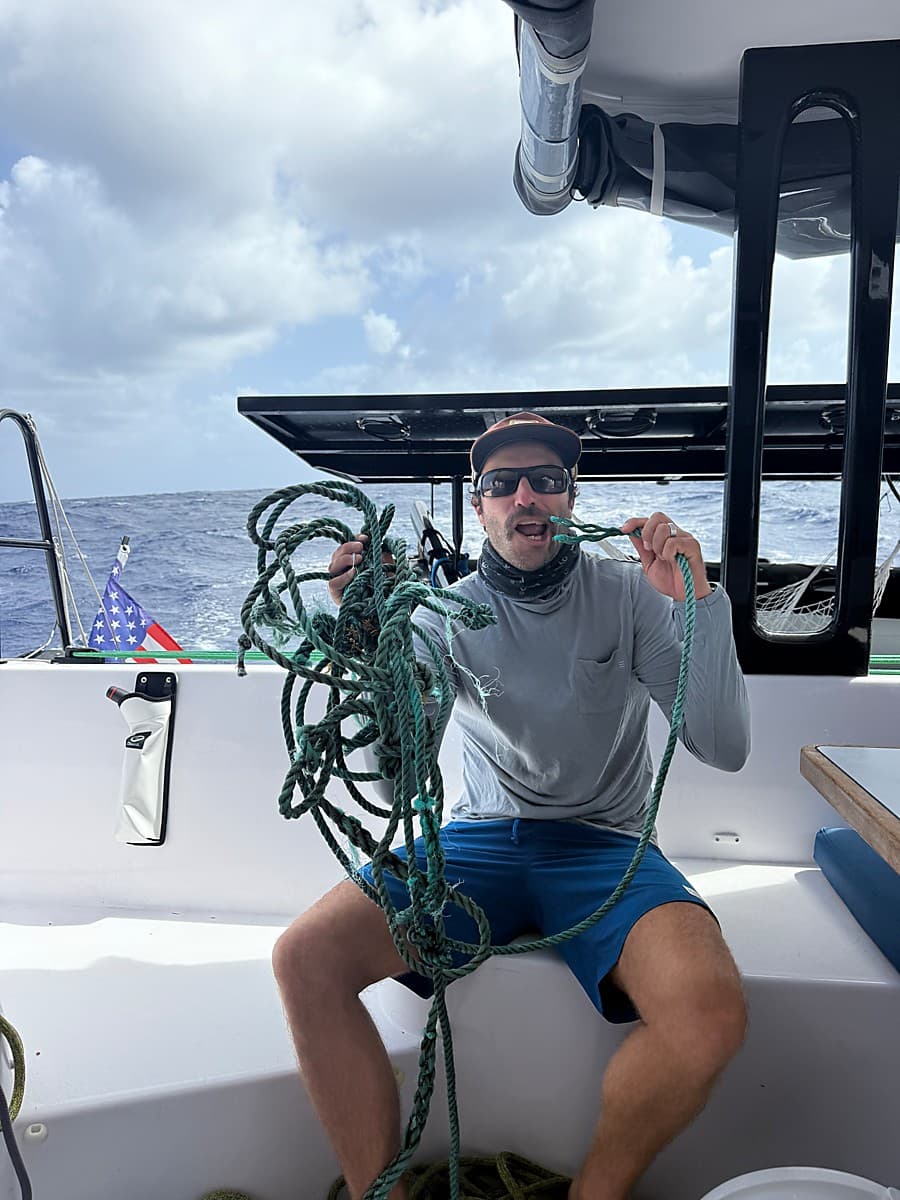
One day I took over the shift and turned off the autopilot, as I like to hand steer from time to time. Unexpectedly the wheel was fighting me hard. This is unusual, as generally the boat stays well balanced. As I adjusted sails and course, I was unable to get the boat to behave correctly, as we were down to five to eight knots, which was too slow. Eventually Kate put a GoPro under the water, and we thought we could see something under the water. We pulled in the foresail and put the boat into the wind. I jumped into the water, a rather nerve wracking activity in three mile deep water, 700 miles away from the closest land. I found a length of nylon rope wrapped around the starboard rudder, and spent an invigorating ten minutes in the water with a knife cutting it away. The waves were around three meters tall and the wind was blowing at 25 knots, so the whole operation was a bit awkward. Once I got back on board and we got the sails out again, I was rewarded with the usual light touch of the wheel, and we were back to cruising along at around 10 knots.
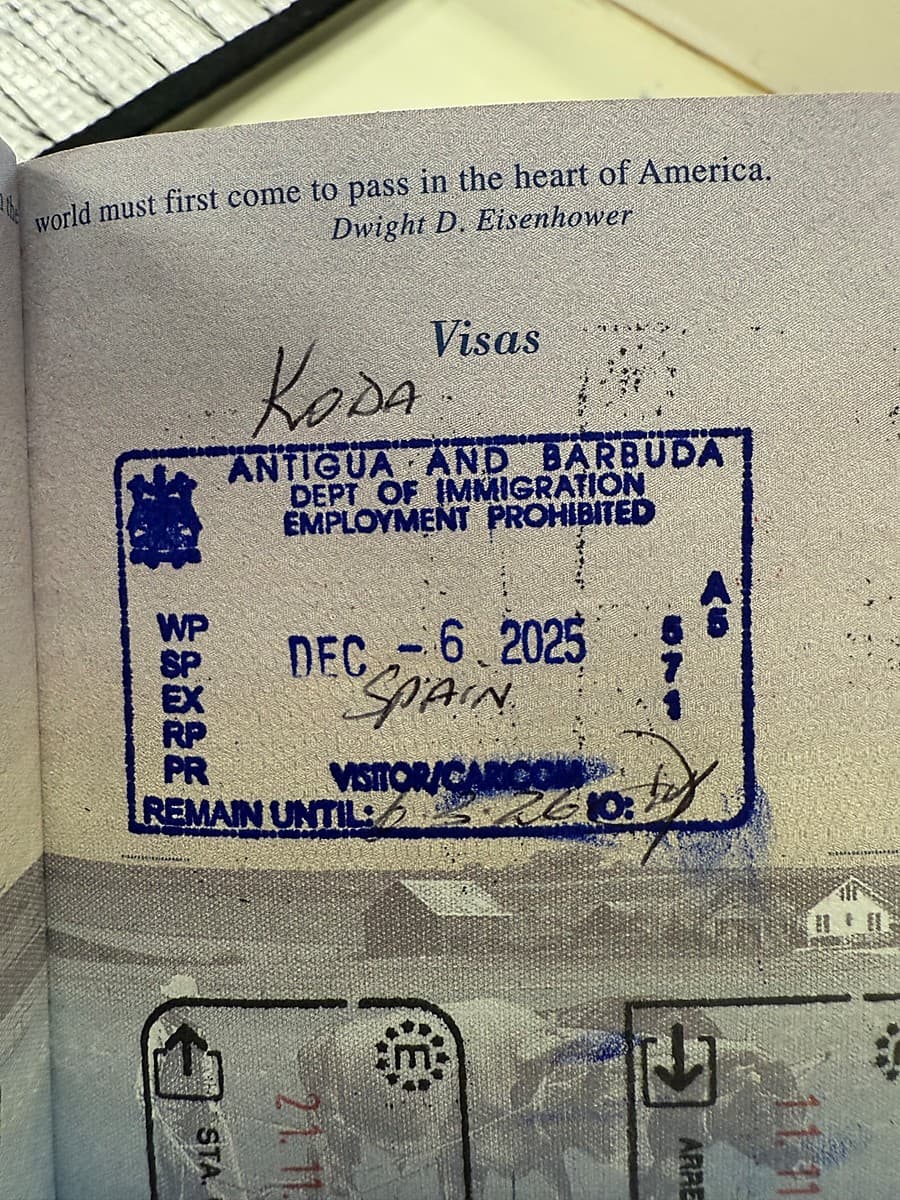
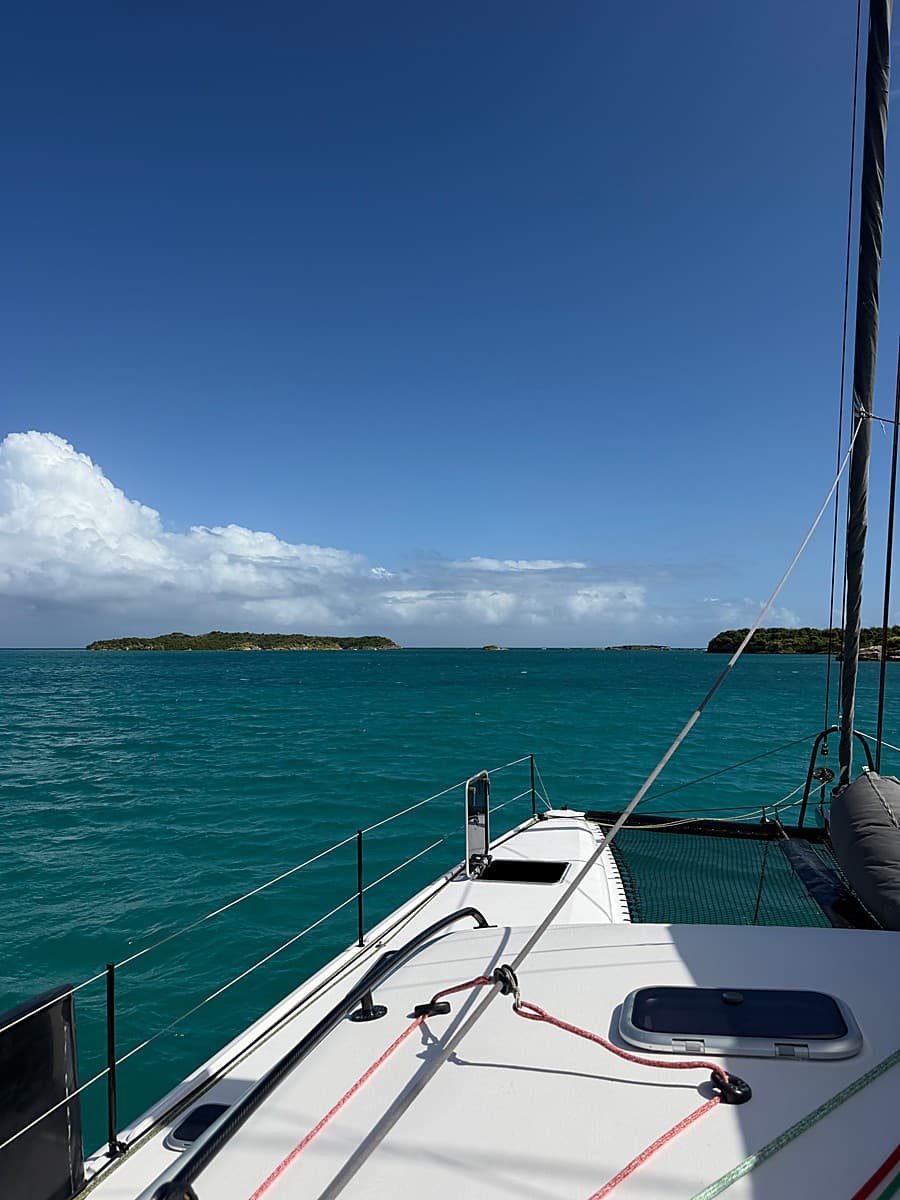
Somewhere along the line we changed our destination from Barbados to Antigua, and shifted course to make landfall there. Before we knew it we had spotted land, and a few hours later we were bringing in the sails for the last time. We motored through a small gap in the reef, and made for a small beach in the lee of a little island. We got the anchor down and relaxed. We had dinner ashore, and slept our first night in relative silence. The horizon had been defeated, for now, until the next time we sail out of sight of land, into the horizontal mountain range of the ocean.