Leaving the Saintes the wind was strong. We put two reefs in the main and were under staysail. We were sailing with the wind on the beam, which is our fastest point of sail, but the large waves slowed us down. The waves caused us to heel over more than we enjoy, and some of them were steep, breaking over the windward bow, dousing the boat in salt water. It wasn’t a long sail over to Portsmouth, on Dominica, but it was unpleasant. As we ducked into the windshadow of the island, the wind became lighter and more gusty, while the ocean flattened out. This last hour or so of sailing served to remind us of how much fun this can be, and attenuated our memory of getting beat up in the channel.
We waved away the boat boys, who materialized to try to sell us a mooring, fish, or some other dubious good or service, and dropped anchor near to the customs and immigration office. I dropped Kate off at the small jetty and went back to the boat while Kate got all the documentation sorted out. Here the difference between French islands and those with England in their history became evident, as $20EC was demanded for using the jetty. For thirty seconds. This scheming and scrambling for money was a theme throughout Dominica, something I don’t particularly enjoy.
After we got our documentation sorted out we left Portsmouth, as where we were anchored wasn’t very good. We put out the genoa and drifted around the corner to a little river mouth sandbar. It was a picturesque spot behind a hill, and despite a slight swell coming in from the west, we enjoyed a quiet night without the lights of any town intruding. In the morning a slight rain dampened our enthusiasm for getting an early start, and we waited for the sun before raising sail and pointing south. We were wanting to get to Rousseau, as that is where all the interesting things in Dominica were supposed to be located. The wind had other ideas.
In the Antilles, the group of islands stretching from Barbuda down to Grenada in a north to south arc, the wind almost always comes from the east. Sometimes it's the northeast, other times southeast, but it is generally east. These are the trade winds that make sailing across the Atlantic pretty easy, and make sailing in these islands a reliable experience. These easterly winds mean that the western side of the islands are in a windshadow. That makes winds behind the islands light, flukey and unpredictable. Having ducked behind Dominica we were benefiting from the flat ocean and quiet anchorages and suffering from the lack of wind. Most boats sail between the islands and then turn on the motor behind the islands to make headway. We don’t like motoring.
The conditions were interesting. We had to stay on our toes to take advantage of each gust and puff to keep us moving. We were averaging around 2 knots. After zig zagging around and playing each little air current we eventually got into some wind, and wound up charging into Rousseau at 12 knots under the stay sail in flat seas. Quite enjoyable sailing, to let the boat run and not have to worry about the sea state.
Arriving into Rousseau we took a mooring, as the anchorage was deep and poor. We also had heard problems with cruising boats being the victim of crime in Dominica, and by picking up a mooring, some of that can be minimized, as your safety becomes at least a low level concern to the owner of the mooring.
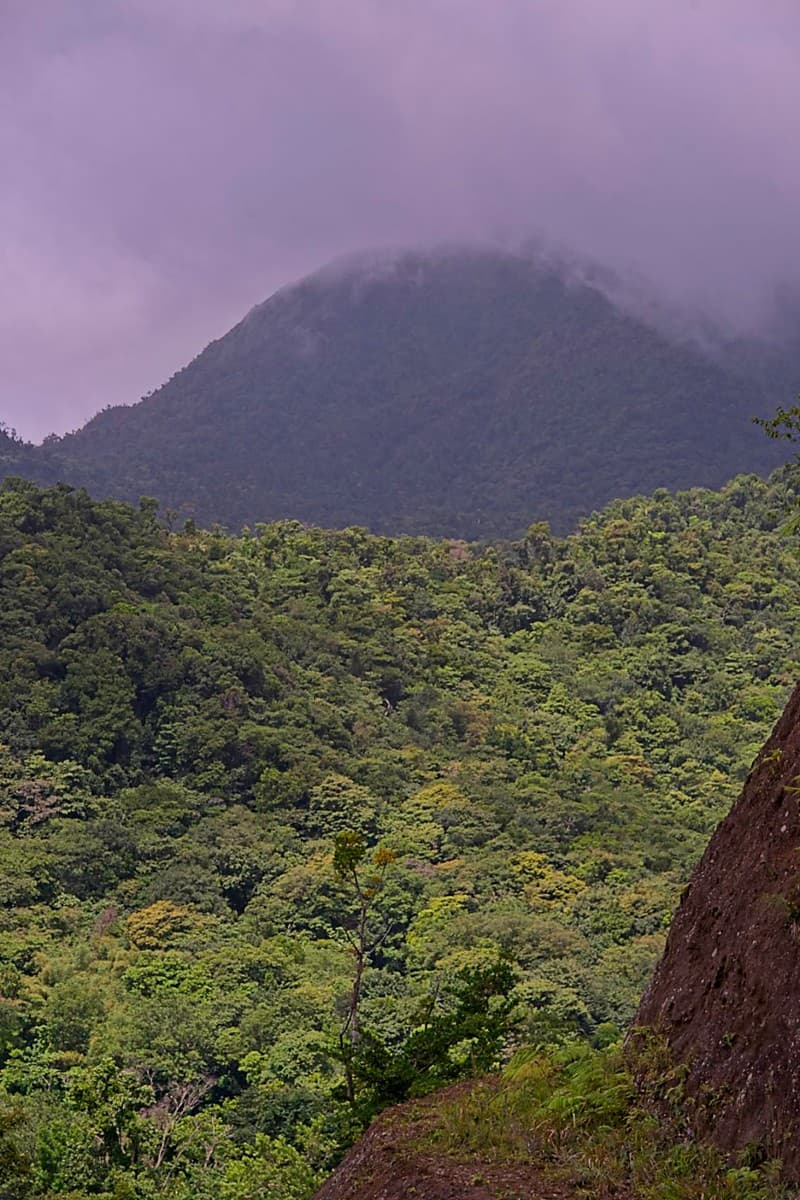
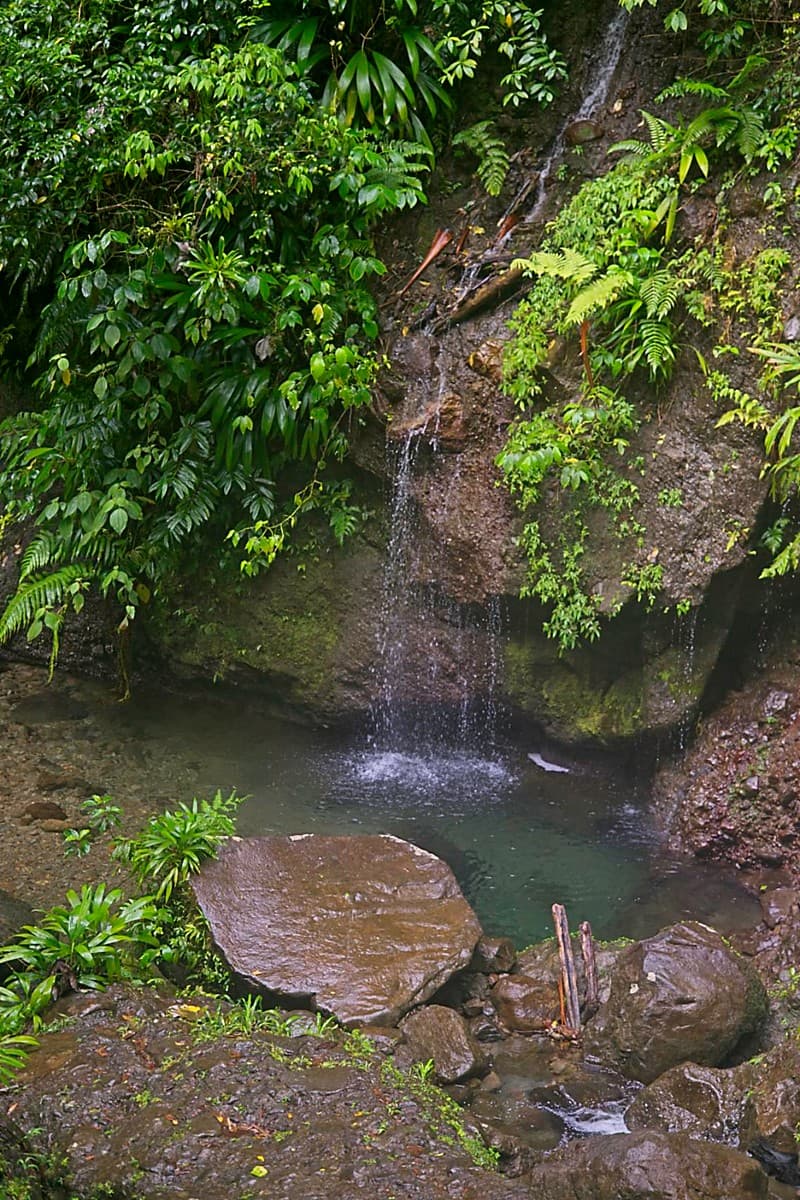
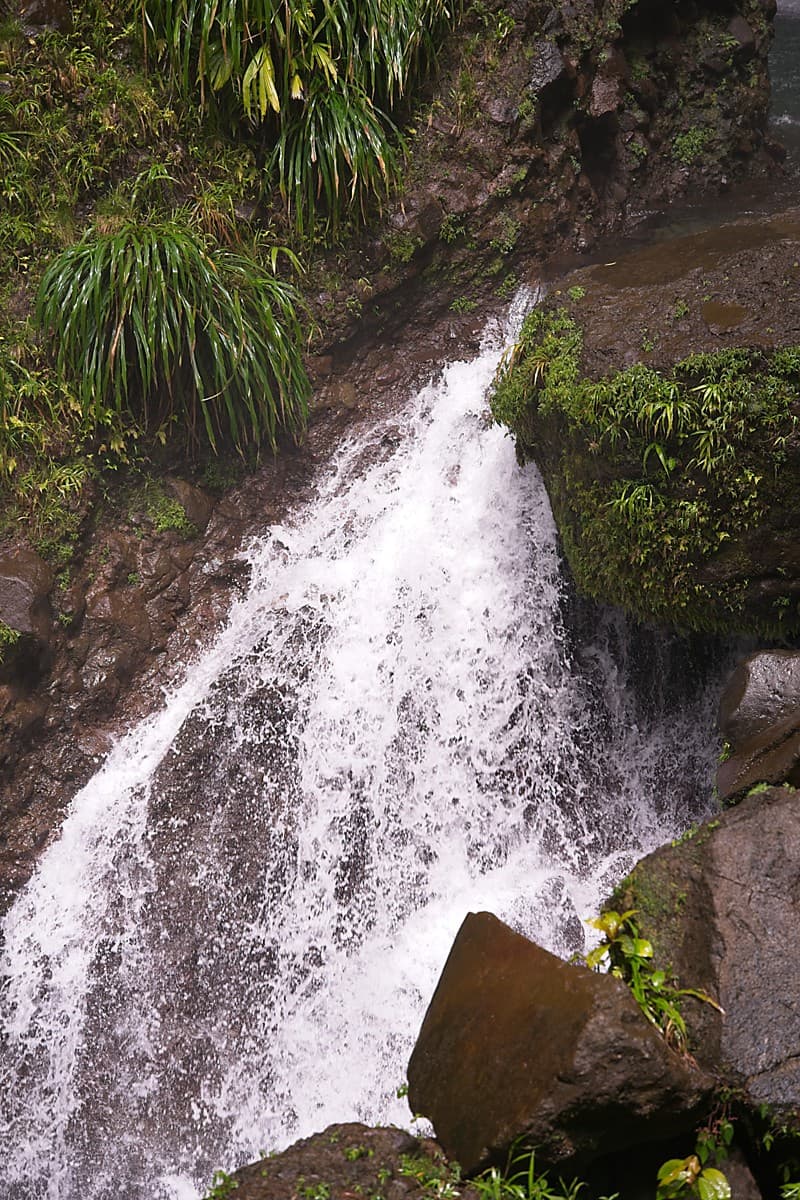
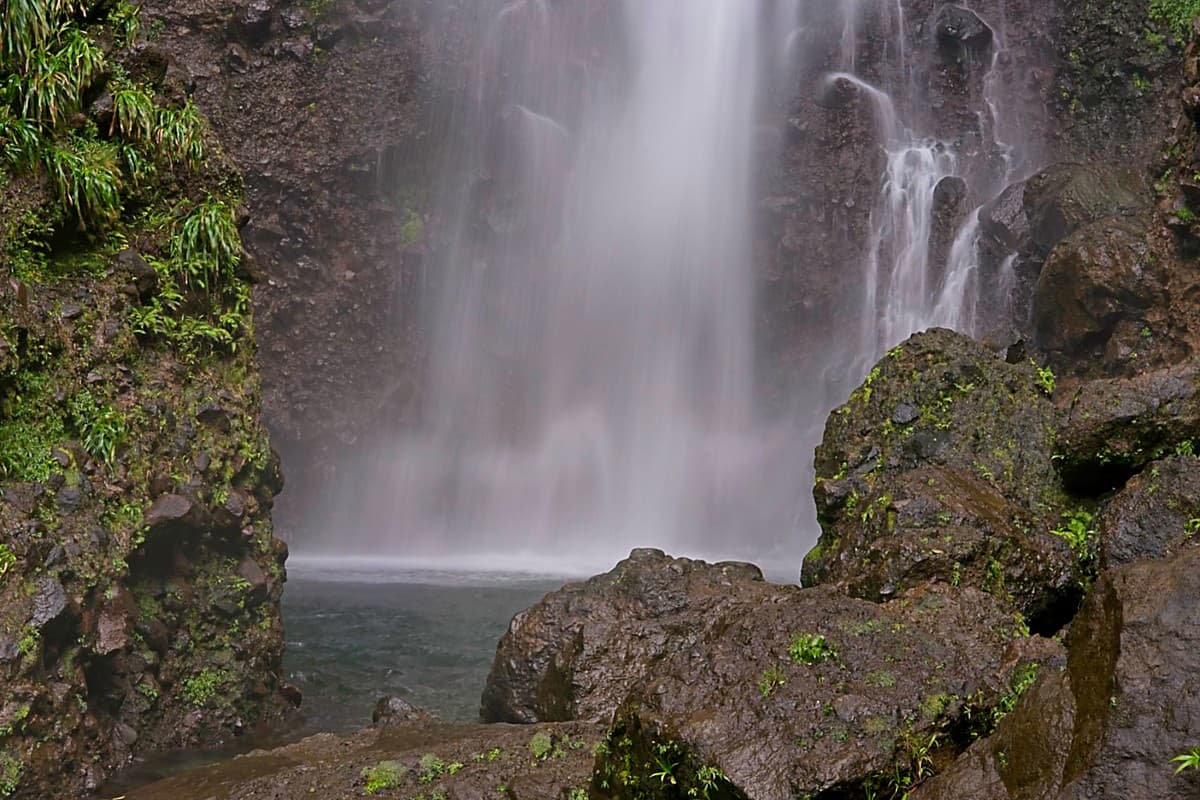
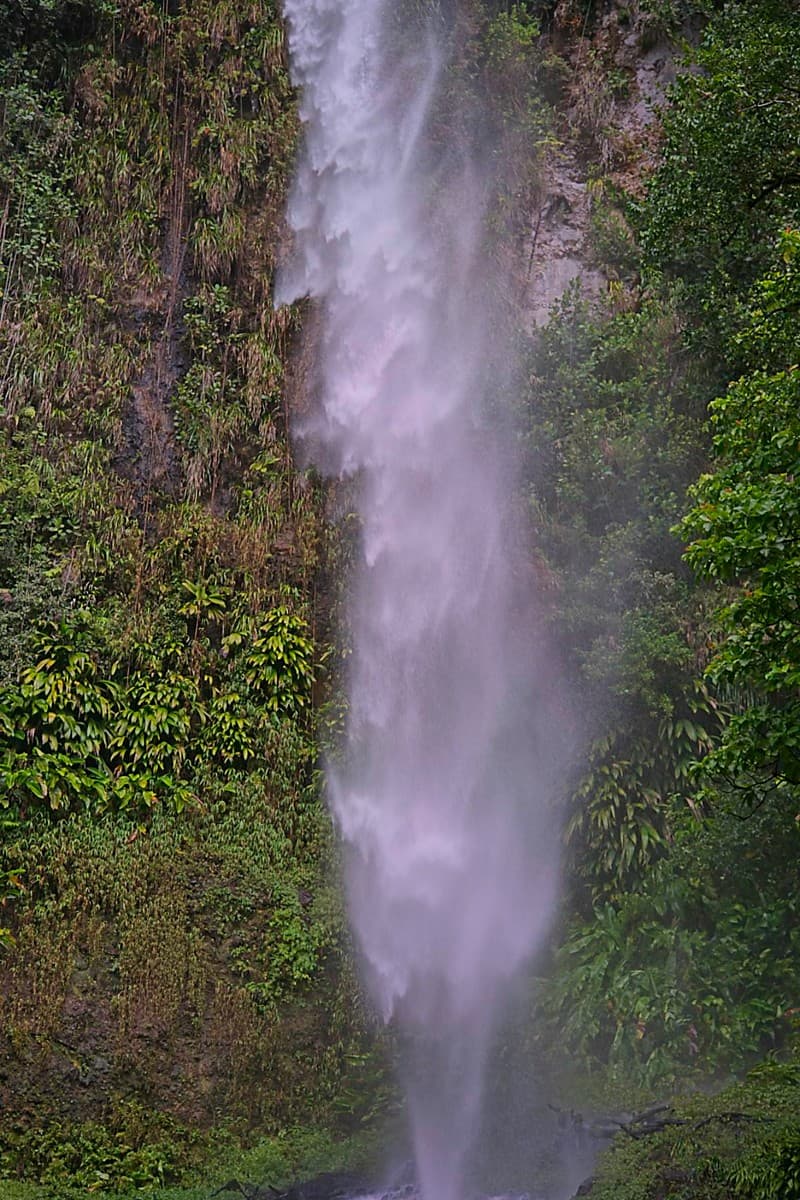
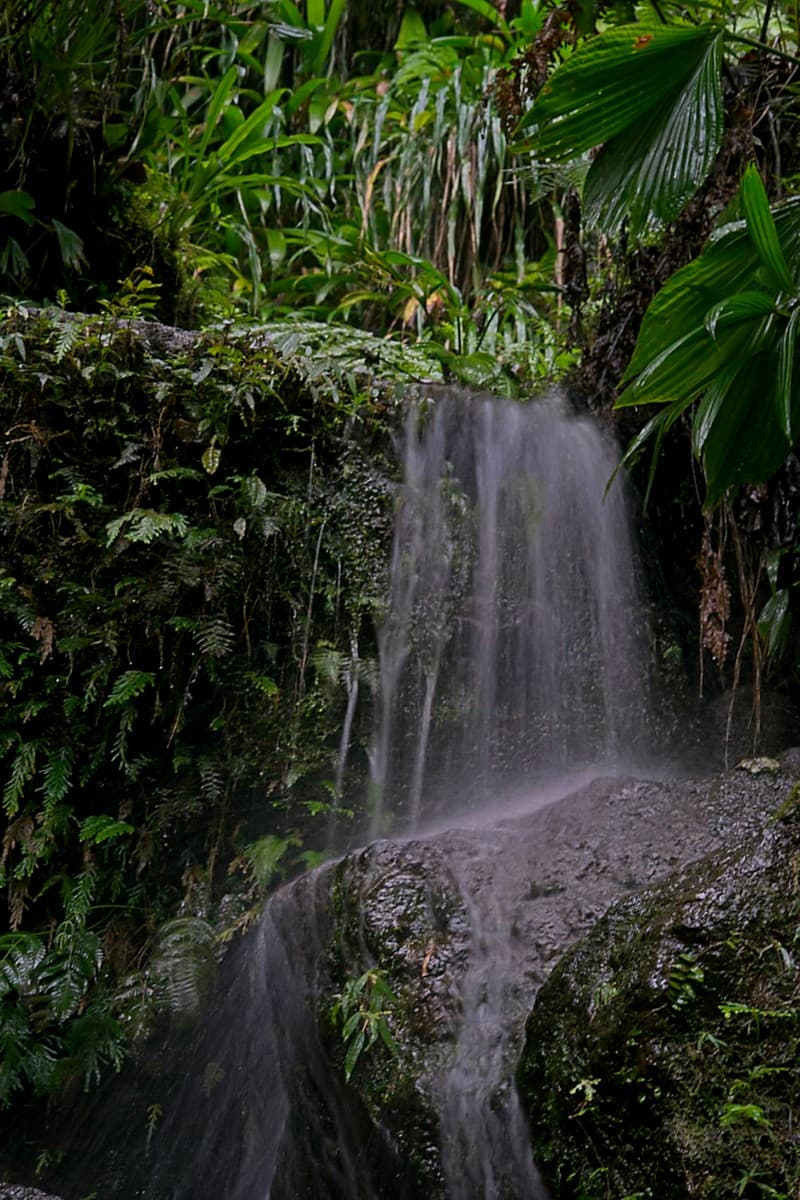
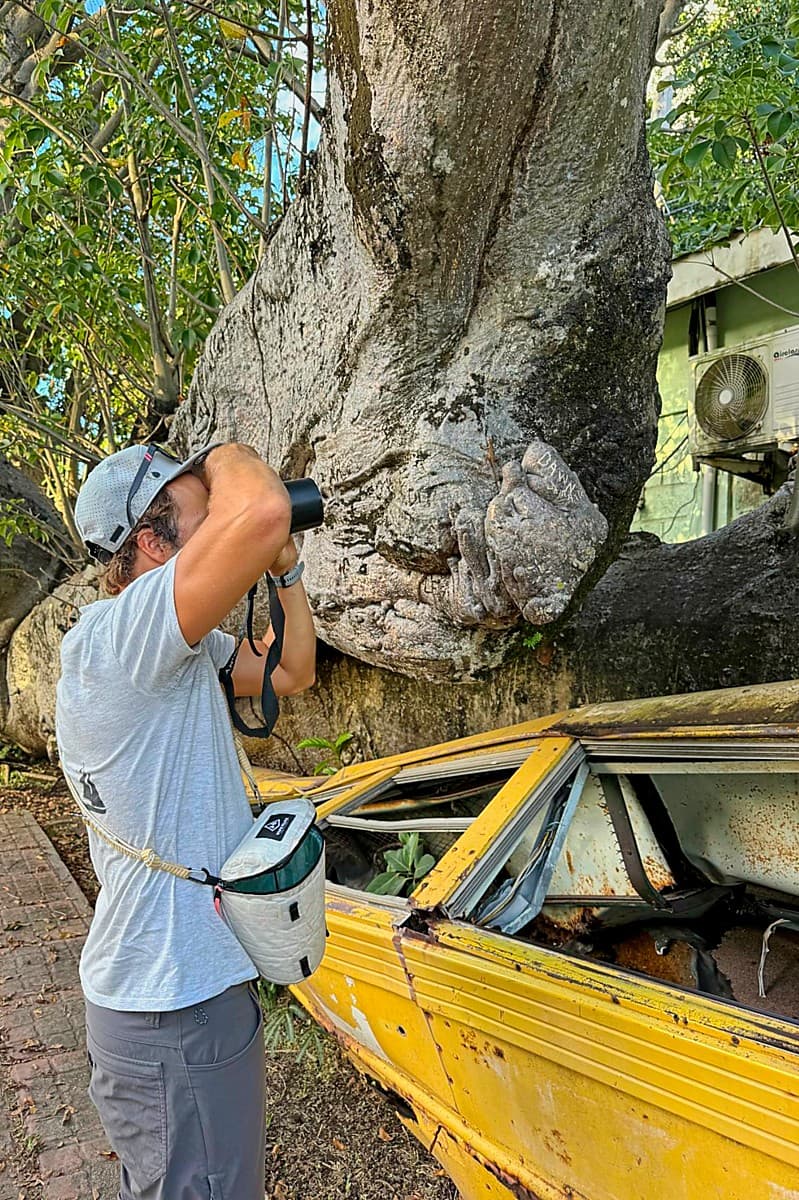
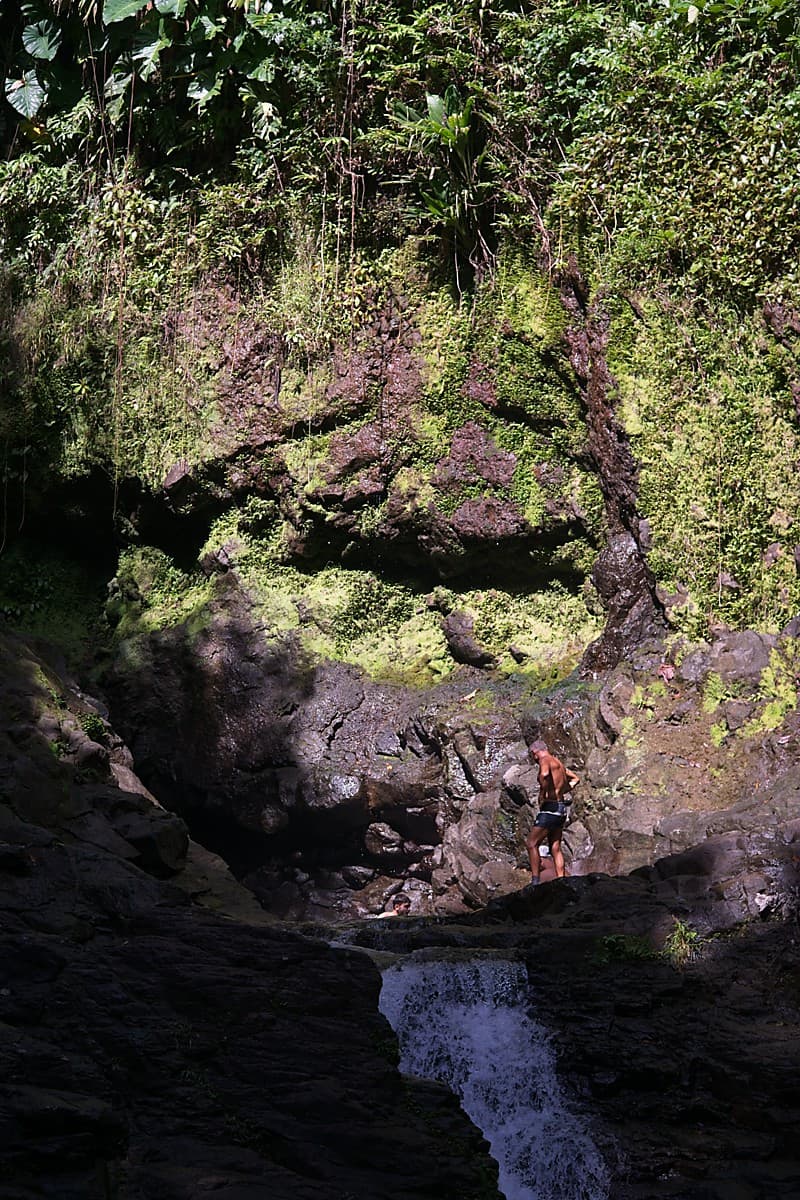
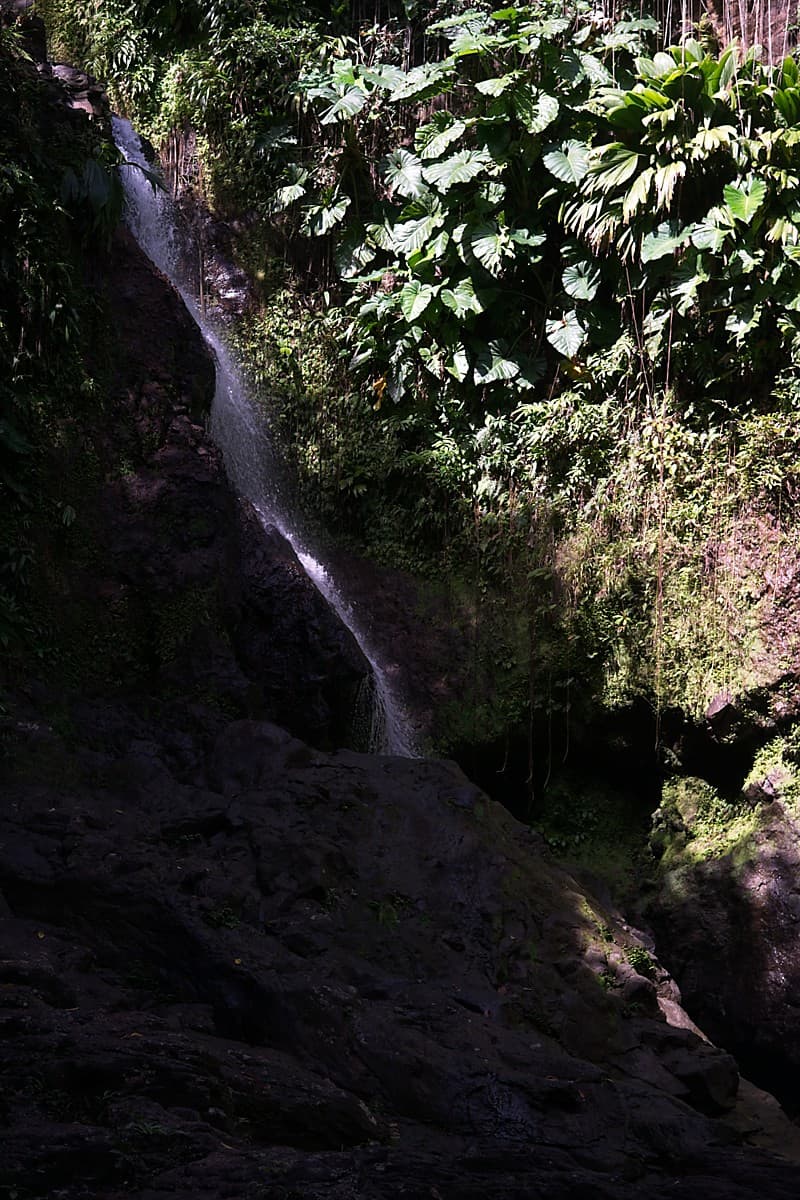
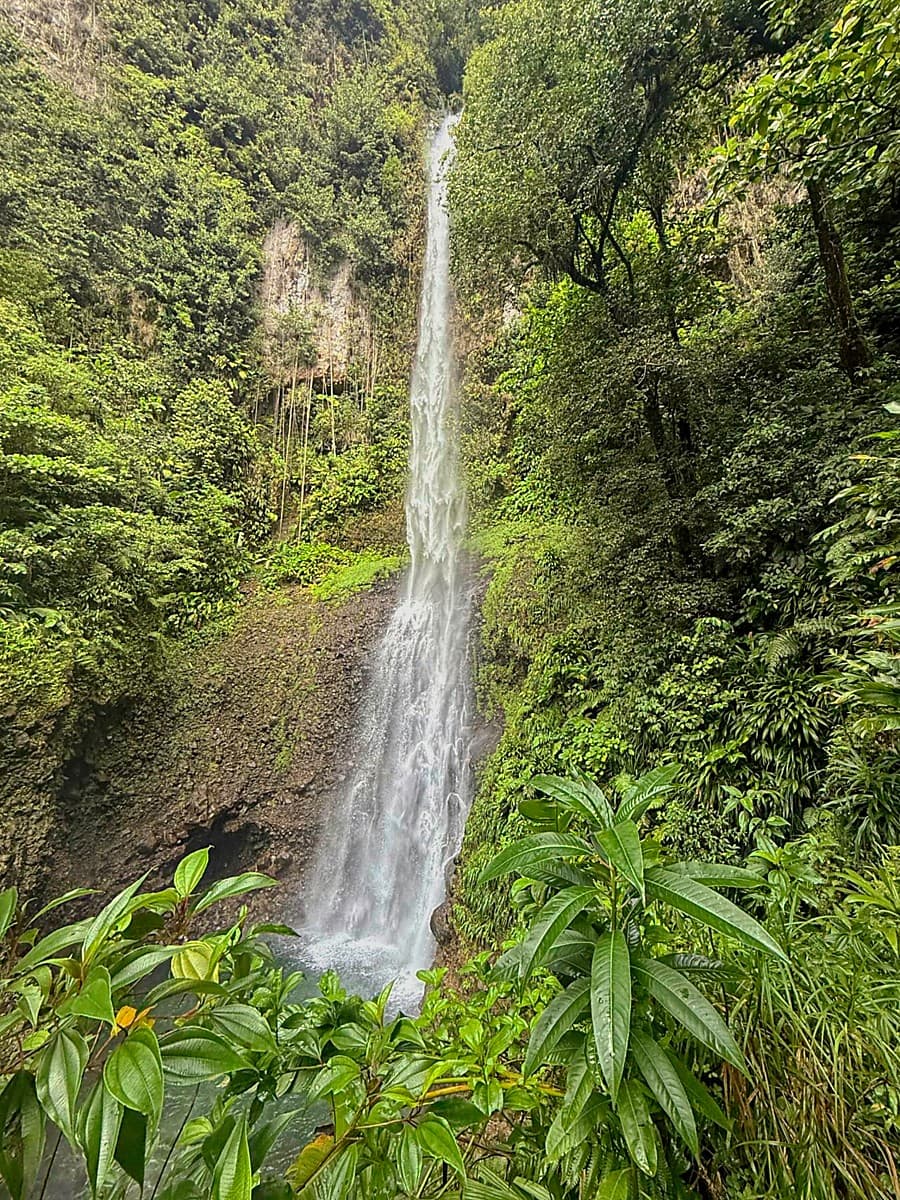
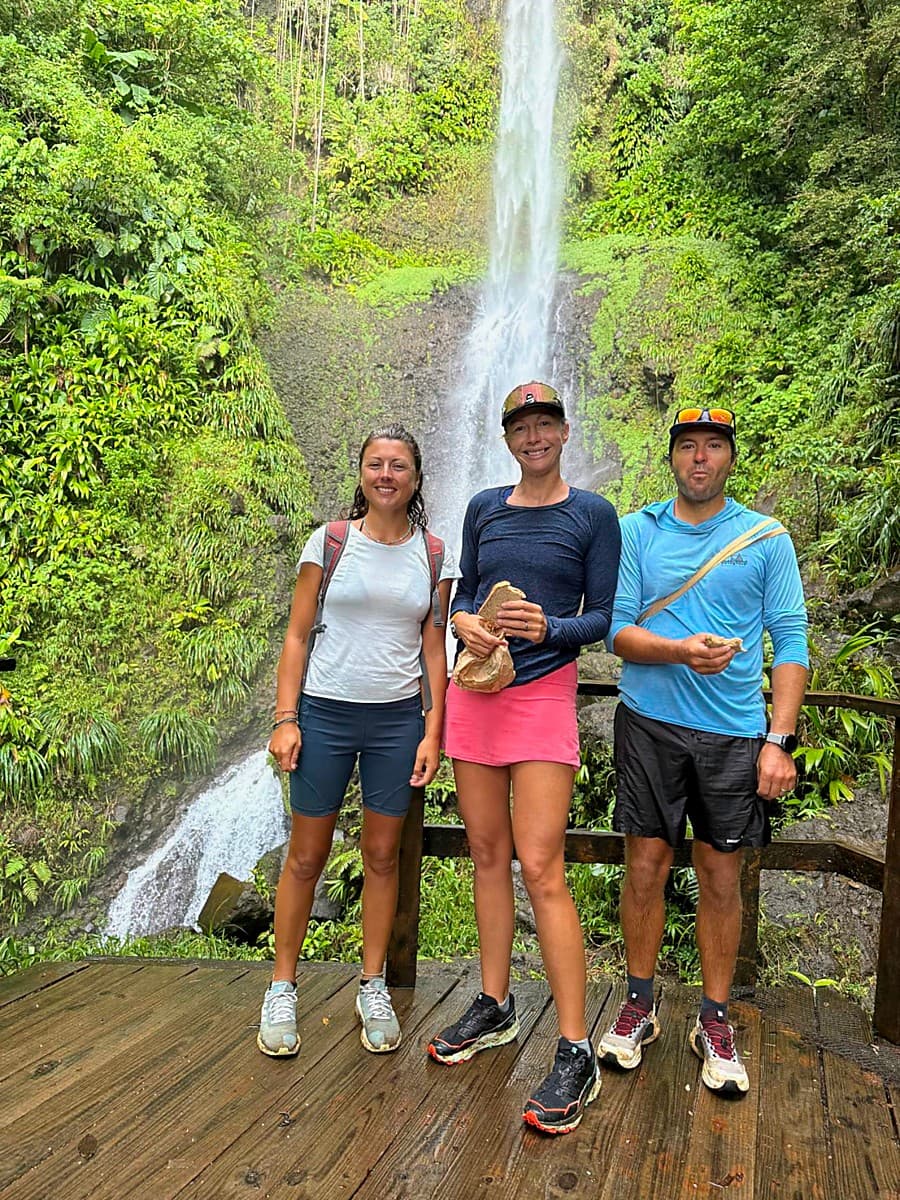
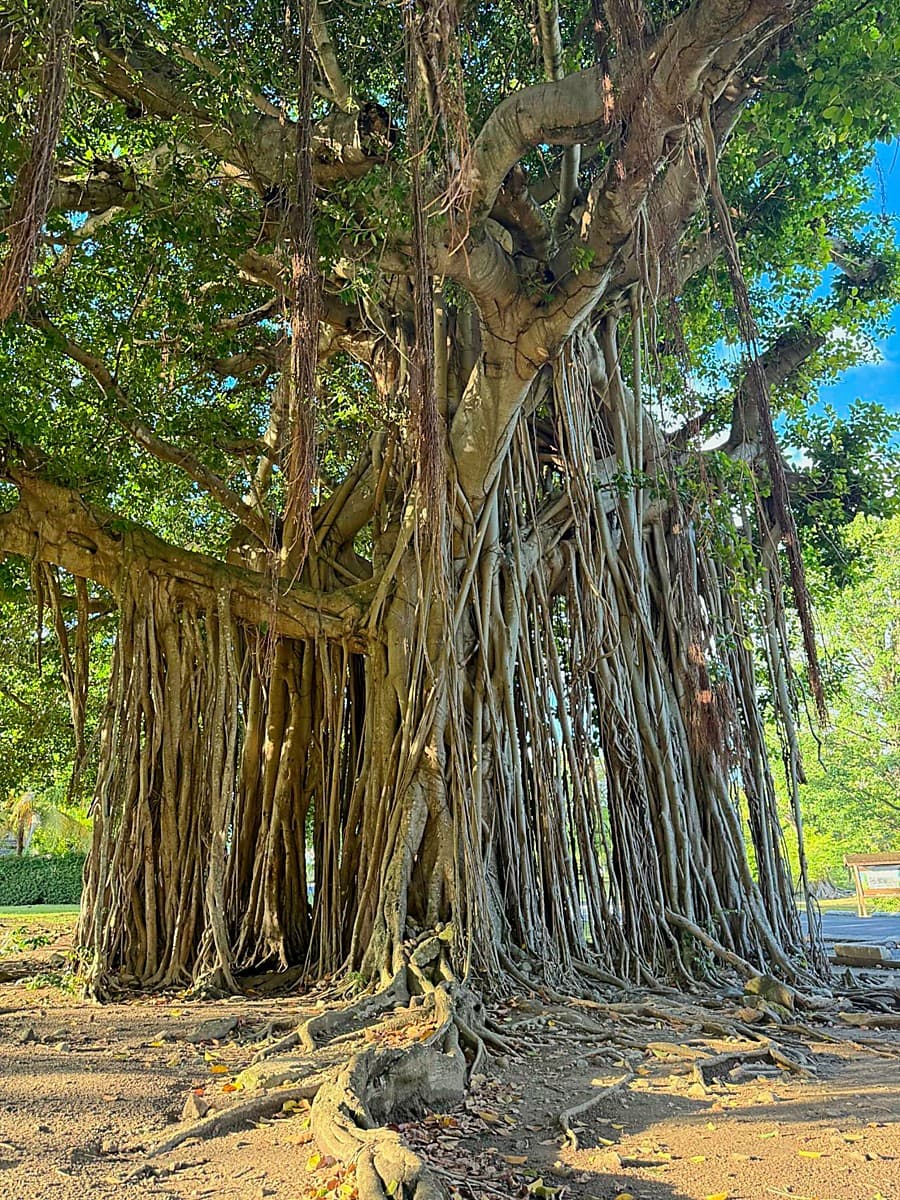
The next couple days we superficially explored Dominica, secure in the knowledge that we would be back later in the season. We tried to do a hike, but were shut down by the park service who insisted we ‘needed a guide’. Instead we took a short walk to a spectacular waterfall and went for a nice swim. The terrain was rugged and abrupt, and we enjoyed the rain and mist that changed the light and view by the minute. The fresh water was another relief, and we wallowed around in it like a couple of hippos. We strolled around town, checking out the botanical garden that had a bus sitting underneath a tree from when the island was devastated by a hurricane. We found an excellent smoothie shop, and went for a nice dinner in the part of town close to the cruise terminal. Our meal was excellent and we will definitely be returning to this restaurant.
Throughout our visit it was very evident that the economy in Dominica is all related to tourism. Two cruise ships a day docked in town and disgorged their masses upon the island to pillage its natural beauty. The longest cable car in the world is being constructed to take these tourists to some of the attractions, so they don’t have to walk, and so they can be charged more money to look at nature. Upon first inspection this is solidly not our scene, but we will be coming back, and maybe another perspective will help us enjoy the island more.
Leaving Dominica our next stop was Martinique. I had two motives for wanting to sail along the windward shore, rather than the lee as we had done in Dominica. The first was that I was tired of sailing in the lee, as forward progress is slow and painful. The second was that the waves all break on the windward side, and I wanted to surf. Since we had arrived in the Caribbean, the surfing opportunities were few and far between, and there was a favorable forecast in the future. I managed to convince Kate, and we sailed to the eastern side of the island, making a few tacks before arriving in La Trinité, Martinique. Being French, there was no need for going ashore for arrival formalities, as everything was on line. We spent one night in the shallow bay of La Trinite, bought some pastries, and then sailed east, as we had to work our way around the Tartane Peninsula. We made a series of small tacks, trying to spot an anchorage we were interested in, but decided to continue on, as the waves seemed to be closing out the channel. We rounded the top of the peninsula, and drifted downwind into the Baie du Tressor. Upon reading the description of the entrance I learned that this was only a day anchorage, so we reversed course and drifted a bit further down, to the Baie du Gallion. This was large shallow, and flat, with muddy water. As we went to start the engines to make our way in to anchor the port engine died. Uhoh.
After managing to anchor with one engine, we started poking around in the engine compartment. Concluding it was most likely a fuel delivery issue we decided to change the filter. That was the problem, and the motor fired up on the first try. Again we were thankful to be on a catamaran, as when one engine died, we had a back up and were able to maneuver on one engine. With a monohull we would have been left only with sails, which could be dangerous in some situations.
The following day we went on a onewheel ride out to the end of the peninsula. We pushed the boundaries of how steep of hills we could ride up (and down), and arrived at an excellent little beach, with waves. The next morning we came back, but I brought my board. I paddled out at around 8am and surfed a couple hours, mostly alone. Since the waves are governed by the trade winds, the conditions stay the same all day, and dawn patrol isn’t really a thing here. No one likes getting up early, and I benefitted, having the most fun session since we had left Baja a couple years ago. It was great to be floating in warm water, taking my pick of fun little peaks that stood up over the flat reef. The only negative was the short period which made getting back out quite a chore, especially combined with my lack of fitness. Although all the foiling had slightly diminished my already slight surfing talent, I had an unreasonably good time in the short, punchy waves. As more people started to filter out into the line up, and I became more tired I decided to head in.
Heading south from the Baie du Gallion we explored the east coast of Martinique. No one seems to like it, but there are some nice spots with good protection, as well as some nice spots that would be great in flat seas with little wind. Several of our planned anchorages didn’t work out due to weather, so we found ourselves in Le Marin sooner than we anticipated, and found a huge, open bay that narrowed into a hurricane hole at the top. The holding was good, and our first day there I enjoyed a fun foil session, tacking up the channel all the way into town.
We were in Le Marin to pick up some boat parts that had been sent to the Grand Large Yachting base, the parent company for Outremer. They had our parts and we were happy to see them. One of the things was a new windlass gypsy, the part of the boat that raises the anchor chain. We had been given the wrong size at delivery, and so our chain frequently skipped during retrieval. With the new one installed everything worked as it should, which was a relief after more than a year of noisy and unpredictable chain raising. We also got diesel in La Marin; our first refueling since Gibraltar. This proved to be a mistake, as everyone gets fuel here, and we had to wait in line, while all the French skippers tried to cut the line. We had to physically box them out with our boat, something that is amusing in retrospect. Bunch o wankers.
Fueled, provisioned, and running out to time to make it to Saint Vincent and the Grenadines in time for Kate’s brother and his kids’ visit, we waited another day or two for a favorable wind window to make the 80 mile or so transit around Saint Lucia to Saint Vincent. Then, early in the morning we once again hauled up anchor (quietly) and raised the sails before ghosting down the channel, out into the wind and the open ocean.